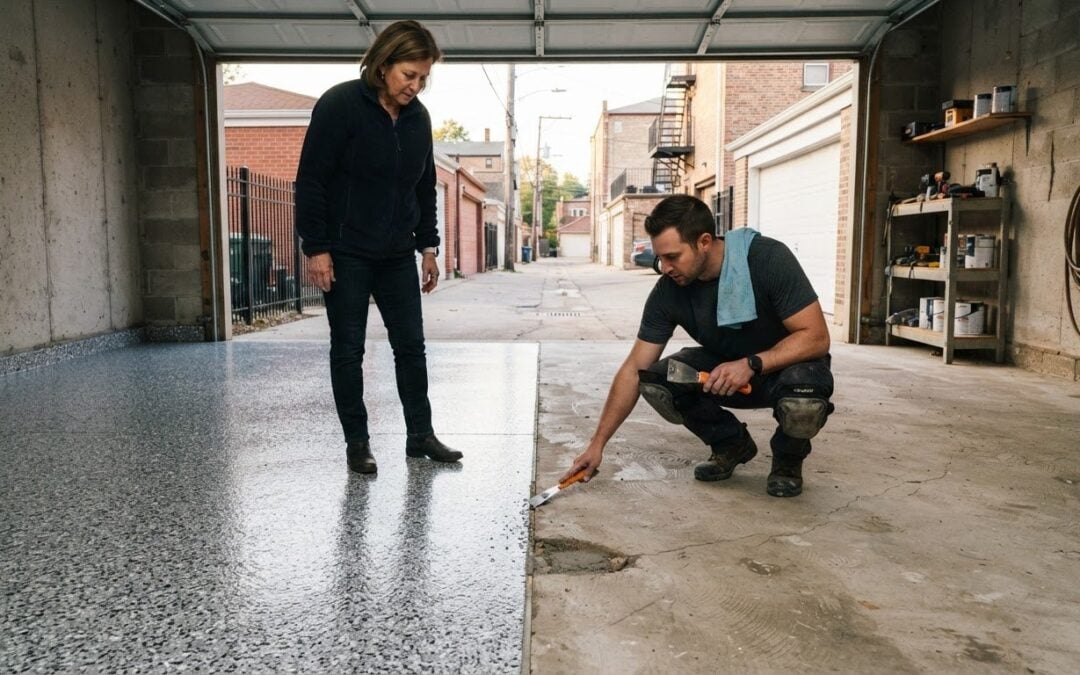
The fastest-curing coating isn’t automatically right for every concrete floor. Key polyaspartic coating benefits include UV stability, resistance to chemicals and everyday wear, and a seamless surface that’s easy to clean. Polyaspartic is a type of polyurea, and the...
The lowest-cost option may not be the best value for your garage. The cost to epoxy a 2-car garage in Chicago depends on the floor’s measured area and condition, the preparation and repairs it needs, and the coating system and finish you choose. A DIY kit and a...
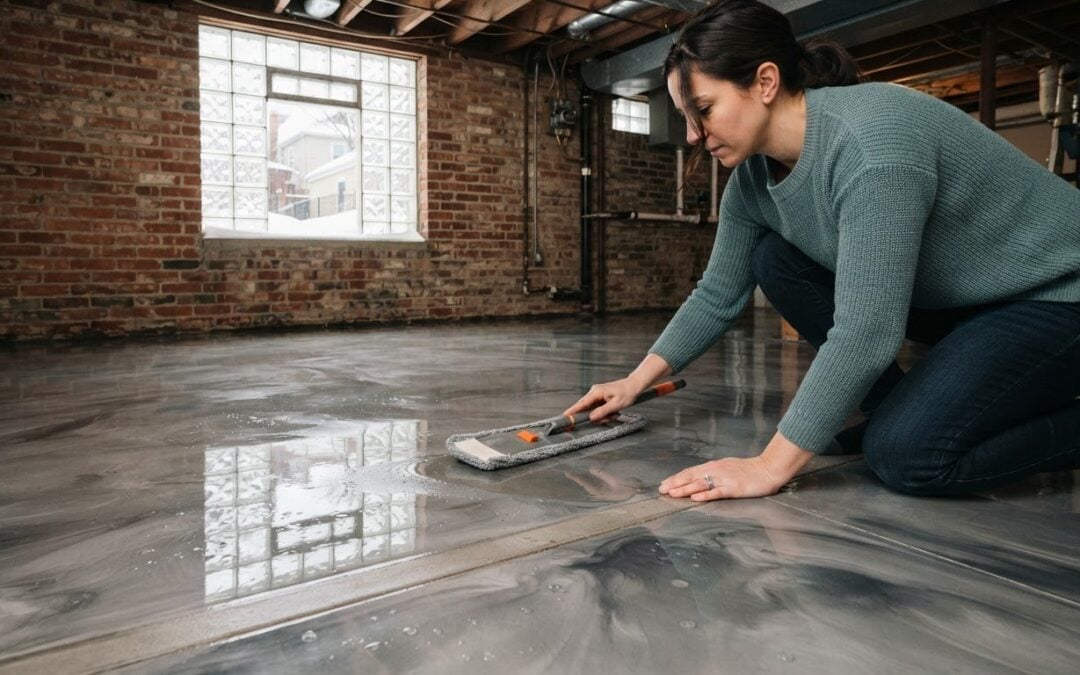
A chip in a reflective basement floor can be repaired, but the repair may remain visible. A reflective basement floor coating can highlight low spots, old patches, and other surface marks, so restoring a consistent appearance may require recoating a full section...
A floor coating decision deserves more than a quick look at color samples. The most useful questions to ask a floor coating installer clarify how the proposed work suits your space, what the written agreement covers, and who is responsible throughout the project....
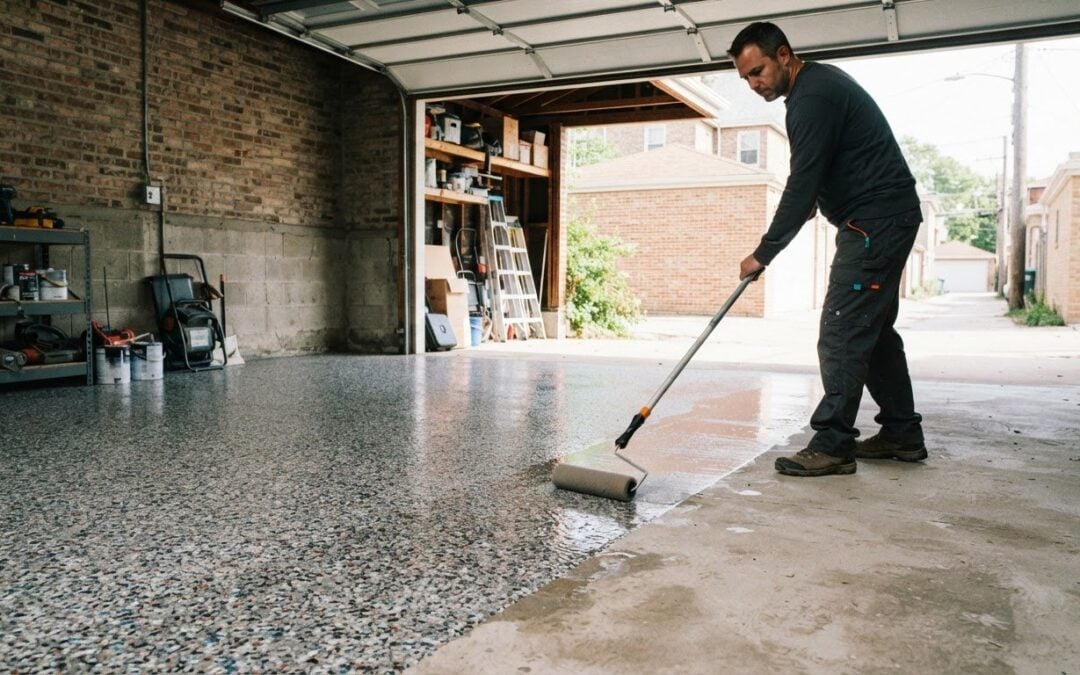
A polyaspartic floor coating is typically ready for walking 24 hours after the final coat, even though its surface may dry much sooner. If you’re wondering what the curing time for polyaspartic floors is, use that 24-hour window as a practical guide for foot traffic,...
The fastest-curing coating isn’t automatically right for every floor. To understand what a polyaspartic topcoat is, start with its role: it’s a fast-curing protective layer, often used as the UV-stable finish in a concrete coating system. Polyaspartic is a type of...



 Polyaspartic Coating Benefits,…November 13, 2026