
The lowest-cost option may not be the best value for your garage. The cost to epoxy a 2-car garage in Chicago depends on the floor’s measured area and condition, the preparation and repairs it needs, and the coating system and finish you choose. A DIY kit and a professionally installed floor also differ in materials, preparation, and application.
It’s natural to compare the price of a kit with an installation estimate, but the coating itself is only part of the project. Concrete inspection, crack or pit repair, mechanical preparation, decorative flakes, and protective topcoats can all affect the work involved. This guide explains how those choices shape the overall cost, what to consider when measuring your garage, and where DIY may make sense compared with professional installation. You’ll also see why surface preparation matters to the finished floor, so you can weigh options with a clearer picture of what your project requires.
Key Takeaways
- Measure the actual floor area, since garage sizes vary and affect the amount of coating and labor required.
- Look beyond the coating itself: concrete condition, crack repairs, and surface preparation can all shape the project scope.
- Compare DIY kits with professional installation by considering preparation, application, and expected performance, not materials alone.
- Choose an epoxy type and finish based on your floor’s condition, desired appearance, and how you use the garage.
- A clear estimate should account for the measured space, necessary preparation, selected coating system, and finish details.
How Much Does It Cost to Epoxy a Garage Floor?
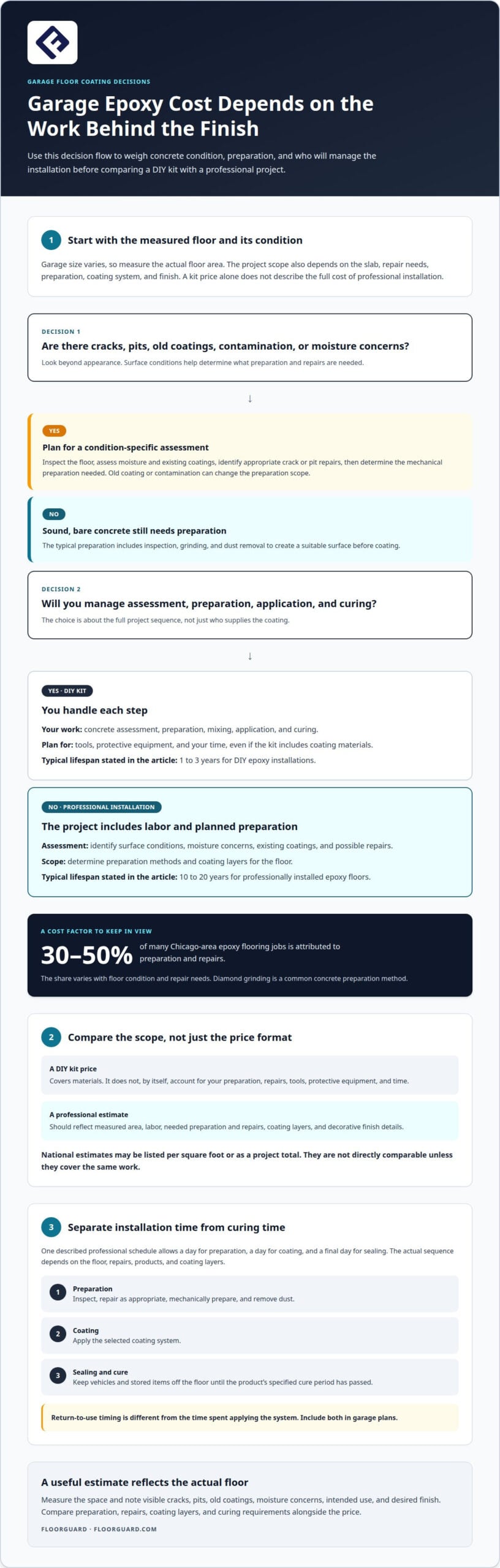
The cost depends on the garage’s measured area, concrete condition, repair needs, and coating system. In Chicago, a floor that needs extensive preparation requires different work than sound, bare concrete. The estimate should reflect the actual surface and the steps needed before coating begins.
Concrete Preparation and Repair
Concrete preparation can include inspection, repairs, mechanical grinding, and dust removal. The required work depends on the slab, not just its appearance. A few shallow cracks call for a different approach than widespread pitting, loose coating, or contamination. An assessment helps identify these conditions and plan for proper coating adhesion.
A preparation sequence typically includes:
- Inspect the floor for cracks, pits, old coatings, and contaminants.
- Assess moisture and existing coatings before selecting a system.
- Repair appropriate cracks and pits, then mechanically prepare the surface.
- Remove dust and residue before applying the coating.
Preparation and repairs account for 30 to 50 percent of many Chicago-area epoxy flooring jobs. Diamond grinding is a common concrete preparation method. The work matters because coating over weak concrete or an unsuitable existing layer can interfere with adhesion. Preparation may take two professionals one day, depending on the floor’s condition and repair needs.
| Concrete condition | Typical preparation | Project consideration |
|---|---|---|
| Sound, bare concrete | Inspect, grind, and remove dust | Preparation focuses on creating a suitable surface. |
| Cracks or small pits | Repair defects, then grind | Repairs add steps before coating. |
| Old coating or contamination | Assess and address unsuitable material | Existing surface conditions affect preparation scope. |
Choose the preparation scope based on the slab’s condition, not appearance alone.
Installation and Floor-Use Timing
Professional installation includes more than applying epoxy. One described schedule allows a day for preparation, a day for coating, and a final day for sealing. The actual sequence depends on the surface, repairs, selected products, and required coating layers. Plan for installation and curing separately.
Keep vehicles and stored items off the floor until the coating has cured for the product’s specified period. Return-to-use timing differs from the time spent applying the system, so include both in your garage plans.
A solid epoxy floor can last up to 20 years. A topcoat may need reapplication every 5 to 10 years, while water-based epoxy may need renewal about every three years. Sweep grit, clean spills, and follow product-specific maintenance instructions to care for the coated surface.
DIY kit materials versus professional installation
A DIY kit leaves the application to you, while professional installation covers the project sequence, including assessment, preparation, and coating. Compare more than the coating materials: the concrete condition, repairs, application, and curing all matter. A professional is recommended for proper concrete preparation and coating application.
Kit materials are only one part of a DIY project. Before application, the concrete needs inspection, cleaning, and suitable preparation. Cracks or old coatings can complicate the work, and uneven application can affect the appearance. Include tools, protective equipment, and time in your planning, even if the kit includes coating materials.
Professional installation includes labor alongside the coating system and project-specific preparation. A pre-installation assessment identifies surface conditions, moisture concerns, existing coatings, and repairs that may affect product selection. The installer can then determine the preparation method and coating layers needed for the floor, rather than relying on a kit’s standard application directions.
- DIY kit: You handle concrete assessment, preparation, mixing, application, and curing steps.
- Professional project: The installation team assesses the surface, plans preparation, and applies the selected system.
- Finish: Kit options depend on the included materials, while professional systems can be selected around the desired appearance and use.
- Total cost: A kit price covers materials, while a professional estimate accounts for labor and project scope.
National installation estimates may be listed per square foot or as a project total. These figures are not directly comparable unless they cover the same work. Check whether the estimate includes surface preparation, repairs, coating layers, and decorative finishes. A materials-only figure does not represent the full labor and preparation involved in professional installation.
Expected service life also changes the comparison. DIY epoxy installations typically last 1 to 3 years, while professionally installed epoxy floors can last 10 to 20 years. These ranges help frame the tradeoff, but results depend on preparation, product selection, installation quality, use, and maintenance. A shorter-lived finish may mean repeating the work sooner.
For a pre-installation assessment, start with the concrete’s condition and intended garage use. Note old coatings, visible cracks, moisture concerns, and the desired finish. A professional estimate is based on the project’s area, preparation, repairs, and coating selection, with pricing provided after a quote request. Discuss your garage floor project to consider the right installation approach.
Epoxy flooring types and material costs
Epoxy is a coating type, but not the only system available for a garage floor. Floorguard offers polyaspartic and polyurea floor coating systems, as well as epoxy flooring. Metallic options create a distinctive appearance, while flake and solid-color finishes offer different looks. The selected system and finish determine the materials and application steps.
Material choice is only one cost factor. The measured floor area determines how much coating the project needs. Concrete condition can add preparation or repair work, and the selected finish affects the coating layers. For example, a solid-color surface and a flake finish have different decorative requirements. A protective topcoat can also change the system’s materials and application scope.
Choose a coating system based on the garage’s use, sunlight exposure, desired appearance, and concrete condition. Metallic coatings suit homeowners looking for a decorative effect. Solid-color options offer a simpler look, while flake finishes add visual variation. A coating system is not the same as paint or a thin concrete sealer, so compare the full system and its intended use.
Chicago’s seasonal weather can affect installation conditions. Ambient and concrete temperatures, along with moisture conditions, influence application and curing. Floorguard installs coatings in cold weather as well. Follow the system’s curing guidance, and keep vehicles and stored items off the floor until the recommended periods have passed.
Your exact project price depends on measured area, concrete condition, preparation, epoxy formulation, decorative finish, and protective layers. The specific figure is provided in a quote tailored to your garage.
Reduce avoidable project work without cutting essential preparation. Clear stored items before installation, choose a finish that suits your needs, and discuss known surface issues during the assessment. Accurate measurements help define the project scope. Skipping repairs or mechanical preparation can compromise adhesion, so don’t coat over weak or contaminated concrete.
- Water-based epoxy: Consider the formulation and application requirements alongside the finish you want.
- Solid epoxy: Compare its appearance and system requirements with other epoxy options.
- Decorative flakes: Account for the added decorative application and protective coating layers.
- Metallic epoxy: Choose it for a distinctive pigment effect, not as a substitute for surface preparation.
Before deciding, have the garage’s area and concrete condition assessed, then compare systems by preparation, finish, and intended use. This makes the estimate easier to understand and helps match the coating to the floor, rather than choosing by appearance alone.
National estimated epoxy coating cost per square foot
Per-square-foot estimates help compare project scope, but they don’t show every detail. Garage size, concrete condition, coating layers, and vehicle use all influence the final estimate.
Chicago Prices by Garage Size
Garage area gives a useful starting point for comparing coating projects. For illustration, a two-car garage floor measuring 400 to 450 square feet would require a different quantity of coating than one measuring 576 square feet. The same applies to a one-car garage floor measuring 250 square feet or a three-car garage floor measuring 650 square feet.
That is why “two-car garage” alone cannot define the project. More floor area generally requires more coating material, while irregular boundaries or additional preparation can change the scope. A per-square-foot estimate and a project total describe different views of the same job.
Basic Materials and Labor
A coating project includes materials and labor, which vary with the system and floor. Materials depend on the selected coating and finish. Labor covers installation steps, including concrete preparation and coating application. Decorative finishes or repairs can add to the project scope.
Compare national per-square-foot estimates only when they include similar work. One estimate may cover preparation and repairs, while another may describe coating application alone. Check whether each includes materials, labor, surface preparation, and finish before comparing totals.
Two-Car Garage Coating Costs
A two-car garage combines the area of both parking spaces, but actual dimensions vary. For example, a 400-square-foot floor needs a different quantity of coating than a 450-square-foot floor. Concrete condition and the selected finish also affect how much labor and material the project requires.
Heavy-vehicle traffic adds another planning consideration. The coating system should suit the garage’s expected use, including vehicle weight, tire contact, and exposure to drips or abrasion. A system selected for appearance alone may not match the demands of frequent vehicle use.
To understand an estimate, separate its main components: measured area, concrete preparation, repairs, coating system, labor, and finish. Confirm which items are included in the total. This makes per-square-foot figures easier to interpret without treating them as a guaranteed price for your project.
For a Chicago garage, the exact price depends on measured area, concrete condition, preparation, coating selection, finish, and use. A quote provides the figure for the specific project.
Use the measurements and intended traffic together when comparing options. A 450-square-foot garage used for daily parking has different requirements from a lightly used space of similar size. Match the coating and preparation scope to the actual floor, then compare estimates with equivalent materials and work included.
Estimate and on-site measurement considerations
When comparing Chicago garage floor coating quotes, match the measured area, preparation, repairs, system, and finish. Read the warranty terms carefully, including coverage, exclusions, maintenance conditions, and the process for a covered issue.
An on-site measurement helps establish the actual project scope. A garage may not be a perfect rectangle, and alcoves or separate floor sections can change the area being coated. A clear estimate should specify which concrete surfaces are included, rather than relying only on a rough description such as “two-car garage.”
Use a consistent measurement process to understand what each quote covers:
- Measure the main floor’s length and width, then note irregular sections separately.
- Identify thresholds, steps, or other concrete areas included in the coating plan.
- Record visible cracks, pits, old coatings, and stains for inspection.
- Match the measured scope to the written estimate and selected coating system.
Measurements matter because material quantities and labor depend on the surface being coated. A quote for the main parking area may differ from one that includes a connected entry or storage section. Ask for those areas to be itemized in the written scope so you can see what each estimate covers.
Compare preparation details as carefully as finish descriptions. One quote might include diamond grinding, while another describes cleaning without specifying mechanical preparation. Look for inspection, moisture assessment, crack or pit repair, contaminant removal, basecoat, decorative flakes if selected, and protective topcoat. Missing steps can make two apparently similar estimates difficult to compare.
Warranty terms need the same close reading. Check which coating components are covered, what conditions may void coverage, and whether the document explains how claims are handled. Also note required maintenance and any limits tied to concrete movement, moisture, or wear. A warranty’s duration alone doesn’t explain the protection it provides.
For a practical comparison, organize the written estimates under these headings:
- Measured scope: included floor areas and any excluded sections.
- Concrete work: inspection, preparation, and listed repairs.
- Coating system: materials, layers, and selected finish.
- Project terms: installation schedule, curing guidance, and warranty conditions.
This breakdown connects the budget to specific work rather than a single unexplained total. If an estimate leaves out preparation details or warranty conditions, its scope remains unclear. Compare the same floor area, system, and finish before deciding.
For a project-specific review of your garage floor and coating requirements, contact our team to discuss your estimate.
Floorguard: Garage Floor Coating Installation
At Floorguard, we provide garage floor coating installation for homeowners considering a DIY kit or a professionally installed system. Our team can assess your concrete and discuss a coating approach suited to its condition, moisture, sunlight, traffic, and the finish you prefer.
If your garage has visible cracks, an existing coating, or unclear surface conditions, our team can help determine the project scope. We install residential, commercial, and industrial concrete floor coatings, with recommendations shaped by the space and its intended use.
Contact Floorguard to discuss your garage floor coating project.
Plan the Right Next Step for Your Garage
Use your garage’s condition and how you use it to guide the next decision. The cost to epoxy a 2-car garage in Chicago is only one part of planning; the coating system also needs to fit the concrete, traffic, and finish you want. A project-specific assessment can turn those considerations into a clear scope for your floor.
At Floorguard, we install concrete floor coatings for residential, commercial, and industrial spaces. For a home garage, our team can help assess the floor and discuss an appropriate coating approach. If you’re ready to talk through your project, contact Floorguard for an estimate.
Contact Floorguard to discuss your Chicago garage and get a project-specific quote.
Frequently Asked Questions
Is Epoxy Flooring Worth the Investment?
Epoxy can be worthwhile if you want a defined garage appearance and a surface that’s easier to clean than bare concrete. Consider how you use the space: a garage used for parking, hobbies, and storage may benefit differently from one used only occasionally. Before deciding, weigh those everyday benefits against the maintenance the selected product requires, including its cleaning instructions and any limits on chemical use.
What is the average cost to epoxy a 2-car garage floor in Chicago?
There isn’t one average that accurately describes every Chicago two-car garage project. Pricing is customized based on concrete condition, square footage, and the chosen flooring system. Treat broad online figures as background, not as a budget for your specific floor. A customized quote gives you a project-specific amount to consider alongside your preferred system and finish.
How many square feet is a typical 2-car garage floor?
A typical two-car garage floor is approximately 400 to 450 square feet, but the actual area depends on the garage’s layout. For a more useful measurement, divide an irregular floor into simple sections, measure each section, then add their areas. Include only concrete surfaces intended for coating. This approach can account for a side alcove without counting adjoining areas outside the project.
What is the cost per square foot for garage floor epoxy installation in Chicago?
There is no fixed per-square-foot rate that applies to every Chicago garage coating project. A square-foot figure is useful only when you know what it includes and whether it reflects the same system and scope. Use it as a comparison tool, not a stand-alone budget. The estimate should identify the work being priced so the figure has context.
What factors affect the cost of epoxy garage flooring, including floor condition and coating thickness?
Concrete condition, area, system selection, and finish all influence project scope. Thickness alone is not a reliable way to compare different coating systems. Compare the proposed system and its intended use instead. A garage exposed to sunlight or frequent vehicle traffic may call for different considerations from a lightly used interior space.
How much does concrete crack repair and floor preparation add to epoxy installation costs?
There is no fixed add-on for repairs and preparation because the work depends on the slab’s condition. A few localized cracks call for a different plan from widespread cracking or a deteriorating surface. If movement or structural damage is present, a coating is not a substitute for addressing that underlying issue. Ask for repair work to be described in the project scope.
What are typical DIY material costs versus professional installation costs for a 2-car garage?
DIY kit materials and professional installation are different kinds of budgets: a kit covers the coating materials it includes, while professional work is scoped for the installation project. Before choosing a kit, check its stated coverage, required coats, and application instructions against your garage’s actual area. Also consider whether you can complete each preparation and application step correctly. A professional assessment can clarify the work involved, and professional preparation and application are recommended.


