
The fastest-curing coating isn’t automatically right for every concrete floor. Key polyaspartic coating benefits include UV stability, resistance to chemicals and everyday wear, and a seamless surface that’s easy to clean. Polyaspartic is a type of polyurea, and the right system depends on the concrete, exposure, traffic, finish, and project schedule.
Quick curing can help limit disruption, especially in garages and busy facilities, but it doesn’t remove the need for careful surface preparation or proper curing before the floor returns to use. Upfront cost can also be higher than epoxy, so it’s worth weighing the full installation needs against the performance you want.
Here, we explain how polyaspartic coatings work, where they’re commonly used, and how they compare with polyurethane. You’ll also learn what affects cost, which installation conditions can limit your options, and why inspection, concrete preparation, and cure time all matter when choosing a coating system.
Key Takeaways
- Assess sunlight exposure and the finish you want when considering color stability for an indoor or outdoor floor.
- Separate coating application time from curing and return-to-service time when planning a garage or facility project.
- Match the coating system to the floor’s condition, traffic, chemical exposure, and maintenance needs across residential, commercial, and industrial spaces.
- Compare polyaspartic with polyurethane by weighing faster curing against polyurethane’s ability to be applied in thicker layers.
- Build the project budget around preparation, repairs, system design, and installation needs, not just the coating material.
UV resistance and color stability
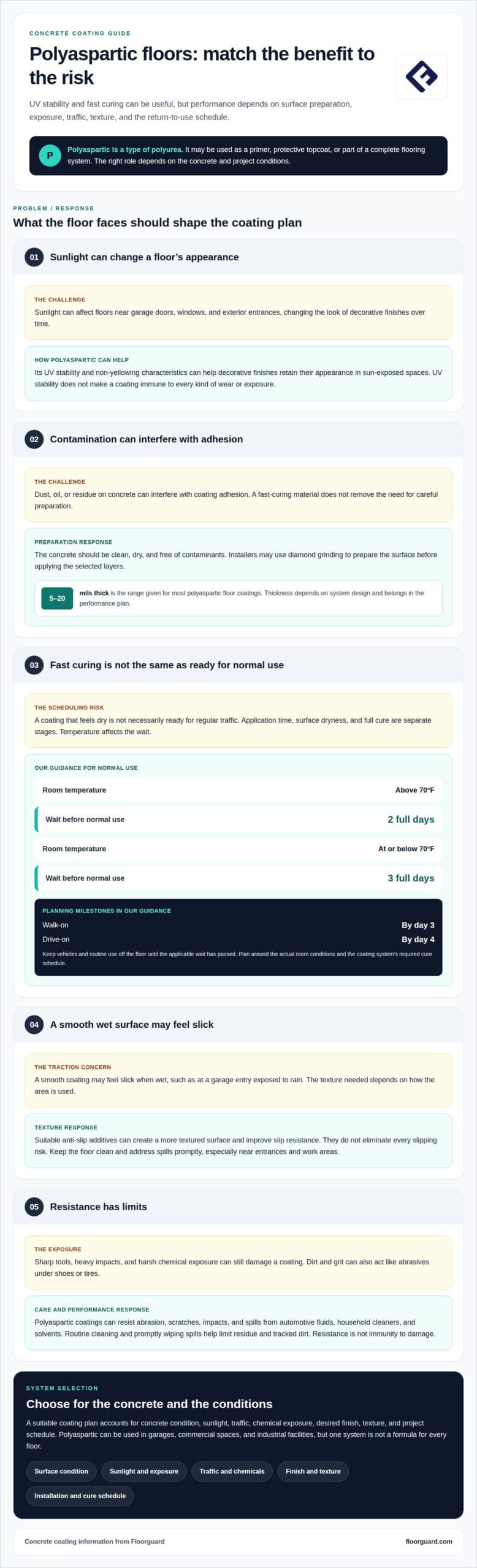
Sunlight can change a floor’s appearance over time, especially near garage doors, windows, and exterior entrances. Polyaspartic coatings are UV stable and non-yellowing, helping decorative finishes retain their appearance in sun-exposed spaces. UV stability helps preserve color, though it doesn’t make a coating immune to every kind of wear or exposure.
How long does polyaspartic floor coating last, and what affects its lifespan? Its service life depends on surface preparation, system selection, traffic, exposure, and maintenance. Traffic, coating thickness, and care affect its lifespan. Proper surface preparation and a coating system suited to the concrete also affect performance. Routine cleaning helps prevent dirt and grit from acting like abrasives under shoes or tires.
Durability depends on more than color. Polyaspartic coatings can resist abrasion, scratches, impacts, and spills from automotive fluids, household cleaners, and solvents. In a garage, for example, promptly wiping up oil or cleaner helps limit staining and keeps residue from being tracked across the floor. A seamless coated surface also has fewer joints where dirt can collect than a floor made of separate pieces. Resistance has limits, so sharp tools, heavy impacts, or harsh chemical exposure can still damage a coating.
Texture matters where traction is a concern. A smooth coating may feel slick when wet, while suitable anti-slip additives can create a more textured surface. The right texture depends on how the area is used: a garage entry exposed to rain may need different traction than a dry storage room. Added texture can improve slip resistance, but no coating eliminates every slipping risk. Keep the floor clean, and address spills promptly, especially around entrances and work areas.
Appearance and protection also depend on installation. Concrete should be clean, dry, and free of contaminants before coating; dust, oil, or residue can interfere with adhesion. Installers may use diamond grinding to prepare the surface, then apply the selected coating layers and texture. Most polyaspartic floor coatings range from 5-20 mils thick, depending on system design. A thinner or thicker build affects how the floor performs, so UV stability, abrasion resistance, chemical exposure, and desired finish all belong in the coating plan.
What Is (Polyurea) Polyaspartic Floor Coating?
Polyaspartic is a type of polyurea coating made by mixing two components before application. Its fast-curing chemistry can support a short installation schedule, but the floor must still follow the full recommended cure period before normal use.
Fast Curing and Return to Service
Fast curing describes how quickly the coating hardens after application. It can help limit downtime in a garage or work area, but a coating that feels dry isn’t necessarily ready for regular traffic. Floorguard’s guidance is to wait 2 full days before normal use in rooms above 70°F, or 3 full days in rooms at or below 70°F.
For planning, the walk-on milestone is by day 3, and the drive-on milestone is by day 4. Keep vehicles and routine use off the floor until the applicable wait has passed. This distinction helps prevent an early return to service from marking or stressing a coating that’s still curing.
Curing Time and Workability
Workability is the time available to spread and finish the mixed coating before it begins to set. Because polyaspartic can have a short application window, installers prepare tools, materials, and the concrete before mixing the components. A planned sequence helps produce an even finish across the floor.
Application time, surface dryness, and full cure are separate stages. Even when a coating hardens quickly, the floor must still follow the required use schedule. For example, a garage project needs to account for the vehicle’s return, not just the time the coating takes to become touch-dry. Room temperature affects the wait before normal use, so plan around the actual room conditions.
Temperature Range for Curing
Temperature affects curing and the time before the floor can return to normal use. Floorguard’s guidance distinguishes rooms above 70°F from rooms at or below 70°F: the required wait is 2 full days in the warmer room, and 3 full days in the cooler room. Follow the applicable period rather than relying on a general estimate.
In a garage, temperature can differ from the rest of the home, so the room’s conditions matter for scheduling. Keep foot traffic, vehicles, and stored items off the coating until the required period has passed. Separating installation from curing helps homeowners and facility managers plan access without compromising the finished floor.
Fast-curing materials still require careful application and a complete cure schedule. Discuss your polyaspartic coating project with Floorguard when you’re planning installation and return-to-use timing.
Common flooring and industrial applications
Polyaspartic coatings can be used as a primer, a protective topcoat, or part of a complete flooring system. The appropriate role depends on the existing concrete, exposure, traffic, and finish requirements.
What surfaces can polyaspartic coating be applied to, and how should they be prepared? It can be applied to concrete, including a sound existing epoxy flooring system. Before coating, the surface should be clean, dry, and free of contaminants; installers inspect the slab, assess moisture and existing coatings, repair cracks or pits, and mechanically prepare the surface, often with diamond grinding.
An epoxy-coated floor may be suitable for a polyaspartic layer if the existing system is in good condition. Recoating requires proper preparation and a surface profile that supports adhesion between layers. Applying a new layer over a smooth or contaminated finish can compromise the bond, so the old coating’s condition and preparation method shape the recoating plan.
Project turnaround depends on the coating’s role and the floor’s condition. Polyaspartic systems can support multiple coats in a single day, but repairs, surface preparation, decorative flakes, and the selected layer sequence affect the work plan. Application may use a roller, squeegee, or spray equipment, depending on the system and surface. A fast application schedule does not mean the floor can immediately return to full use; curing and traffic timing remain separate considerations.
Texture and finish can be customized for the space. For example, a decorative floor may use flakes, while a work area may need an added texture for traction. Safety planning also matters during application: restrict access to the work area, protect nearby items from coating materials, and follow the product instructions for ventilation and protective equipment. These precautions support controlled application and help keep occupants away from an active coating project.
Before work begins, align the application plan with how the floor operates. A commercial facility may schedule coating around equipment movement, while a garage project may require planning for vehicle access during curing. Concrete inspection, moisture assessment, repairs, mechanical preparation, coating layers, and return-to-service timing all influence the project sequence.
Cost and installation limitations
Polyaspartic coatings can cost more upfront than epoxy coatings. That higher initial cost may reflect the selected system, surface preparation, repairs, and installation requirements. A project’s price depends on its specific conditions and is provided after a quote request. Key factors include floor area, concrete condition, moisture concerns, coating layers, decorative choices, and the access needed for the work.
Preparation is a central part of installation. The concrete must be evaluated for existing coatings, contaminants, cracks, pits, and moisture concerns. Mechanical preparation helps the coating bond, while repairs address defects that could otherwise affect the finished surface. The coating plan should account for the slab’s actual condition rather than simply covering over problems.
Fast curing can be an advantage, but it also limits workability. Once components are mixed, the material begins setting, leaving limited time to spread it evenly. This makes organized staging important: tools, materials, surface preparation, and access should be ready before application begins. Rushing preparation to take advantage of a short installation window can undermine adhesion and the finished result.
Temperature and humidity influence the work plan. Each coating system has application conditions that must be followed; one product’s range cannot be assumed to fit another. Floorguard coatings can be installed in cold weather, but the concrete and surrounding environment still need to be considered when planning the work.
Polyaspartic is not automatically superior for every floor. A coating choice should reflect traffic, chemical exposure, sunlight, moisture, appearance, and available downtime. For example, a busy work area may need a different layer design from a lightly used storage space. Exceptional durability depends on the system and preparation, not the material name alone. A comparison with epoxy should consider the full project scope, including repairs and the time before the floor can return to service.
Texture can also affect both budget and maintenance. Additives may improve traction, but a more textured surface can hold dirt more readily than a smooth finish. The right choice balances slip resistance with cleaning needs and the space’s use. A garage entry exposed to wet shoes may call for a different texture than an indoor room with minimal moisture. Discuss the trade-offs as part of the system design.
Plan for installation and curing as separate phases. A quick application does not mean the floor is immediately ready for vehicles, equipment, or routine traffic. Scheduling should include preparation, coating layers, curing, and the intended return-to-service use. That complete timeline helps property owners weigh the upfront cost against operational disruption and the performance they need.
Polyaspartic compared with polyurethane
Polyaspartic and polyurethane are different coating materials, though both can be used in floor systems. Polyaspartic is a type of polyurea and is often selected as a UV-stable topcoat. Polyurethane can be applied in thicker layers, while a key advantage of polyaspartic is faster curing. The better fit depends on the concrete, exposure, traffic, finish, and time available before the floor returns to service.
Cure speed affects project scheduling. A faster-curing polyaspartic system can help shorten installation windows, which may suit a garage or facility with limited downtime. Polyurethane’s ability to be installed thicker may matter when the coating design calls for a heavier layer. Compare the full system, including preparation, layer sequence, and cure requirements, rather than judging either material by application speed alone.
Sunlight is another useful comparison point. Polyaspartic floor coatings are valued for UV resistance and color stability, which can help preserve a decorative finish near windows or an open garage door. If yellowing is a concern, consider the specific formulation and where the floor receives direct sunlight. A coating’s material category alone does not describe every product’s color performance, so match the finish to the space’s exposure.
Both systems must be considered alongside the floor’s daily demands. For example, a vehicle area may encounter tire contact and automotive fluids, while a commercial work zone may face frequent foot traffic or cleaning chemicals. Coatings offer different balances of cure speed, layer thickness, appearance, and resistance. Concrete condition and preparation also matter: dust, contaminants, or a weak existing layer can interfere with adhesion regardless of the chosen material.
Slip resistance comes from the complete floor design, not simply the coating name. Suitable texture or additives can increase traction, but texture also affects cleaning because debris may collect in deeper profiles. A smooth polyaspartic floor may be easier to wipe clean, while a textured finish may better suit an area exposed to moisture. Choose based on the floor’s use, exposure, and maintenance routine.
Before selecting a system, identify the main priority: faster return to service, thicker application, UV stability, or a particular finish. Then weigh those needs against traffic, chemicals, moisture, and concrete condition. Neither polyaspartic nor polyurethane is universally superior; the right choice is the system designed around the actual floor and its use. For a project-specific comparison, discuss your floor coating options with Floorguard.
Floorguard
Floorguard helps homeowners and property decision-makers choose concrete coating systems suited to their floors and priorities. If you’re weighing polyaspartic against another coating, our team can assess the concrete’s condition and consider moisture, sunlight, traffic, chemicals, finish, and project timing. Those details guide a practical recommendation rather than assuming one coating fits every space.
Our residential, commercial, and industrial concrete floor coating installations account for the surface and how the space is used. For a garage, that may mean considering vehicle traffic and sunlight near the entrance. For a work area, operating demands and return-to-service timing may matter more. Preparation and coating layers are planned around the project.
If you’re considering a polyaspartic coating for your concrete floor, contact Floorguard to discuss your project.
Choose a coating plan that fits your floor
The practical polyaspartic coating benefits depend on how a space is used, not just the material name. Before choosing a system, identify what matters most: appearance, exposure to sunlight or chemicals, traction, maintenance, and how the floor must perform day to day. These priorities help shape a coating plan around the actual concrete and its intended use.
At Floorguard, we install residential, commercial, and industrial concrete floor coatings. Our team can help connect your project requirements with a suitable coating approach and installation plan, so you can make an informed decision without assuming one system fits every floor.
Contact Floorguard about your concrete floor coating project to discuss the right next step. A clear plan starts with your space, your priorities, and the performance you expect from the finished floor.
Frequently Asked Questions
What is polyaspartic made of?
Polyaspartic floor coatings are made by mixing two components before application. The reaction forms a coating layer over prepared concrete. Polyaspartic is a type of polyurea, not another name for epoxy, paint, or a thin concrete sealer. It may serve as a primer, a topcoat, or part of a multi-layer design, depending on the product and project.
Are polyaspartic coatings environmentally friendly?
Some polyaspartic formulations have low VOC content, but that doesn’t make every product or application environmentally identical. Formulation, amount applied, ventilation, and handling all matter. Review the specific product information to understand its emissions and application requirements. For a household project, also plan to keep people and pets away from the work area during installation and follow the product’s directions for ventilation and curing.
Can I apply a polyaspartic coating myself (DIY)?
Professional installation is recommended because polyaspartic coatings can set quickly, leaving limited time to apply and finish the material evenly. A sound result also depends on inspecting the concrete, addressing cracks or pits, removing contaminants, and mechanically preparing the surface. A mistake in preparation or application can affect adhesion and appearance. For a garage floor, account for both installation and curing before planning vehicle access.
What Are the Pros and Cons of Polyaspartic Flooring?
Polyaspartic flooring offers UV stability, resistance to common spills, and a quick-curing installation schedule. Textured additives can improve traction when the floor’s use calls for it. Trade-offs include a higher upfront cost than epoxy and a short application window that demands careful planning. Texture can also make cleaning more involved than on a smooth floor. Weigh these points against the concrete condition and intended use.
What are the main benefits of polyaspartic floor coatings?
Among the practical polyaspartic coating benefits are UV stability, a seamless finish that’s easier to clean, and resistance to abrasion and some chemicals. The system can also support a textured finish where added traction is desired. Maintenance affects how the surface looks over time: sweep and mop with warm water, and use mild dish soap for stains. Avoid using harsh chemicals for cleaning; use only warm water and mild dish soap.
How durable and abrasion-resistant is polyaspartic coating?
Polyaspartic coatings are designed to resist abrasion, impact, and routine chemical spills, but the floor’s performance depends on the system and how it is used. Grit under tires or shoes can wear a surface over time, so regular sweeping helps limit that source of abrasion. Coating thickness, concrete preparation, traffic, exposure, and maintenance also affect service life. No coating is immune to damage from every impact or chemical.
How quickly does polyaspartic coating cure, and when can floors be used?
Cure schedules vary by system and room conditions. For Floorguard floors, allow 2 full days before normal use in rooms above 70°F, or 3 full days in rooms at or below 70°F. The stated general milestones are walk-on by day 3 and drive-on by day 4. Don’t treat a dry-to-touch surface as ready for vehicles; follow the applicable cure schedule before returning the floor to use.
How does polyaspartic coating compare with epoxy for durability, cost, and appearance?
Polyaspartic can cost more upfront than epoxy, while its UV stability can be useful where sunlight reaches the floor. Both systems depend on appropriate concrete preparation and product selection for lasting performance. Appearance comes down to the chosen finish and system design, such as a solid color or decorative flakes. Compare expected traffic, sunlight, chemical exposure, maintenance, and downtime rather than assuming either material is always more durable.


