
A well-kept epoxy floor needs more than an occasional mop. Good epoxy floor maintenance starts with daily sweeping to remove grit, prompt spill cleanup, and at least weekly scrubbing; high-traffic areas need daily attention. A fresh clear topcoat every several years can also help maintain the floor’s gloss and protection.
It makes sense to focus on routine cleaning first. But the topcoat matters, too: it helps protect the finish, and caring for it can support the floor’s appearance over time.
In this guide, we’ll cover practical ways to prevent scratches from dirt and equipment, remove dried spills and stubborn stains, and handle scratches or gouges. You’ll also learn how cleaning routines vary between garages, basements, patios, and busy commercial spaces, plus when topcoat maintenance may be needed. The goal is straightforward: help you care for the surface without using cleaning methods that could wear or damage its finish.
Key Takeaways
- Sweep regularly and use entry mats to keep abrasive grit from scratching the finish.
- Clean spills promptly, and choose gentle cleaners to help protect the coating from discoloration or damage.
- Use a plastic tool carefully to lift dried residue without scraping the floor.
- Address deep scratches and gouges promptly, since damaged areas can allow moisture beneath the coating.
- Learn how periodic clear topcoat care can help preserve gloss and surface protection.
STILL HAVE QUESTIONS ABOUT FLOOR CARE, CLEANING, & MAINTAINENCE?
Keep epoxy floors clean with a routine matched to traffic, suitable products, and careful chemical handling. Wet residue can make the surface slippery; prompt cleanup and coating systems with suitable slip-resistant additives can improve traction, but no finish eliminates every slipping risk.
-
Choose cleaners for floor use and traffic
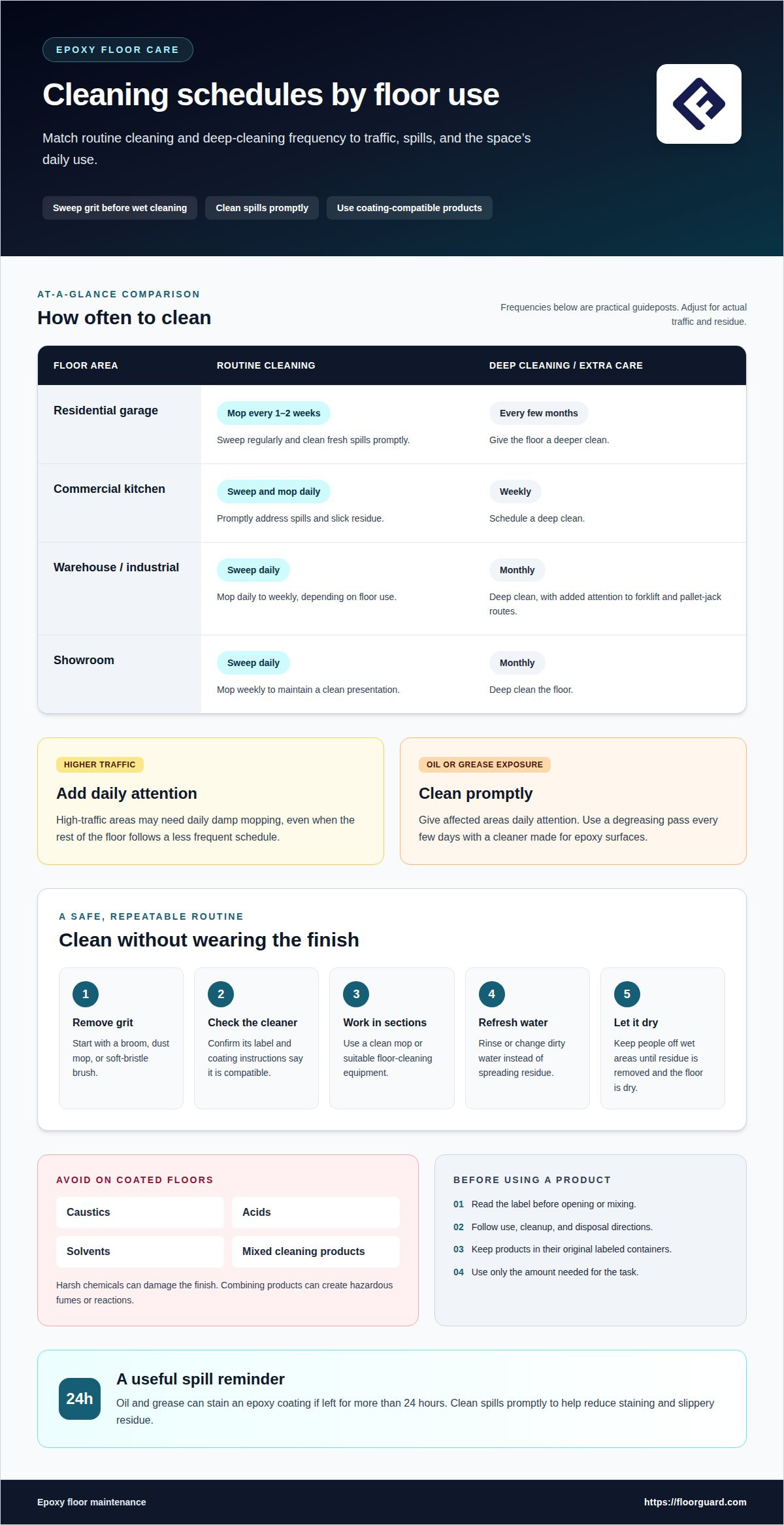
Match the cleaning schedule and product to the floor’s use. A residential garage generally needs mopping every 1-2 weeks and deep cleaning every few months. A commercial kitchen generally needs daily sweeping and mopping, plus weekly deep cleaning.
For warehouses and industrial floors, plan daily sweeping, mopping daily to weekly, and monthly deep cleaning. Showrooms generally need daily sweeping, weekly mopping, and monthly deep cleaning. High-traffic areas may need daily damp mopping. Areas exposed to oil or grease need daily attention, with a degreasing pass every few days using a cleaner made for epoxy surfaces. Clean spills promptly to reduce staining and slippery residue.
-
Handle cleaning chemicals safely
Read the cleaner’s label before opening or mixing it, and follow its use and disposal instructions. Keep products in their original, labeled containers, and use only the amount needed for the task. Don’t combine cleaning products, since mixtures can create hazardous fumes or reactions.
Avoid harsh chemicals, including caustics, acids, and solvents, on coated floors. They can damage the finish. If a product spills, follow its label’s cleanup directions promptly. Keep people away from wet cleaning areas until residue is removed and the floor is dry. Dispose of leftover solution and containers according to the product label and applicable local instructions.
-
Select equipment and compatible cleaners
Choose a mild cleaner for routine cleaning only when its label and the coating manufacturer’s instructions confirm it is compatible with the floor. Check the product label for its ingredients and directions, and avoid harsh liquids that can harm the coating. Start with a broom, dust mop, or soft-bristle brush to remove loose grit before wet cleaning.
For mechanized sweepers, use a soft-bristle brush and remove trapped grit before another pass. Abrasive particles caught under a brush or mop can scratch the finish. Use clean water and a clean mop head so dirty equipment does not spread oil, soil, or residue across the floor.
-
Apply and agitate the cleaning solution
Sweep first, then prepare a mild cleaner according to its label and confirm its compatibility with the coating manufacturer’s instructions. Apply the solution in manageable sections with a clean mop or suitable floor-cleaning equipment. Follow the cleaner’s directions for dilution and contact time; don’t leave a harsh chemical sitting on epoxy.
Agitate soil with a soft mop or brush, paying attention to traffic lanes and areas exposed to grease. Rinse or change the cleaning water when it becomes dirty, rather than spreading residue. Remove remaining solution with clean water when the product directions call for rinsing. Leave the area clear until the surface is dry, reducing slip risk from wet cleaner or soap film.
Preventing scratches and grit damage
Fine grit can act like sandpaper beneath shoes, carts, and equipment. Build these habits into your routine to limit abrasive contact with the epoxy finish.
- Sweep the floor daily, especially near doors and work areas. Epoxy finishes are harder than acrylic and polyurethane finishes, but abrasive dirt can still scratch them. Focus on entry paths, garage parking areas, and loading zones where grit collects. Use a soft-bristle broom or dust mop, and remove the debris instead of pushing it into corners. In a warehouse, pay particular attention to routes used by forklifts and pallet jacks.
- Place mats at entryways to catch dirt and moisture before they travel across the floor. Choose mats that stay flat and can be moved for cleaning. Check beneath each mat regularly, since trapped grit can rub against the coating as the mat shifts. In a garage, position a mat near the door from the driveway. At a commercial entrance, use one at frequently used access points.
- Lift furniture and small equipment instead of dragging it across the surface. For heavier items, clear the route first and use clean protective material beneath the load. A metal toolbox dragged across a garage floor can scratch it, while a loaded cart can grind grit into the coating. Keep protective pads clean so embedded sand does not cause abrasion.
- Set up work zones to keep loose debris away from the coated floor. Before moving boxes, tools, or materials, check their bases for grit and sharp edges. Use a clean barrier beneath items that must rest on the floor, then remove it carefully. In a workshop, sweep around a cutting or sanding station after each task so particles don’t spread into walking paths.
- Train everyone who uses a commercial or industrial floor to avoid sharp turns and skids. Forklift spin and skid marks can add unnecessary wear, so establish clear travel routes and reinforce smooth turns. For residential garages, use clean wheels on rolling tool chests and avoid dragging tires or equipment across the coating. If recurring scratches appear despite these steps, talk with our team about a floor assessment and the condition of the coating.
Removing dried spills and stubborn stains
- Identify the residue before choosing a cleaning method. Check whether the mark is oil, grease, rubber, or dried food, because different residues respond to different approaches. Grease and oil can stain an epoxy coating if left for more than 24 hours, so address fresh spots promptly. Keep foot traffic away from the affected area while you work, especially if the spill remains slick. Avoid applying an unknown cleaner before checking its label and suitability for coated floors.
- Loosen dried residue with a plastic tool, such as a plastic scraper. Hold it at a shallow angle and work gradually from the edge toward the center. That helps lift material without digging into the epoxy. Don’t use a metal blade, screwdriver, or abrasive pad to pry at a stuck spot. If the deposit resists gentle pressure, pause and soften it with an appropriate cleaner rather than forcing the tool beneath it.
- For a dried stain, wipe the mark with a clean cloth wetted with an ammonia household cleaner. Apply the cleaner to the cloth rather than flooding the floor, then dab or wipe the stained area. Follow the product label for use, and avoid combining it with other cleaners. Work in a small area so you can see whether the mark is lifting. Use a fresh section of cloth as residue transfers, instead of rubbing it back across the coating.
- Remove loosened residue and cleaner from the surface after treating the spot. Use a clean, damp cloth to wipe the area, then dry it with another clean cloth. This step helps prevent cleaner film from remaining on the epoxy. Check the surface from several angles under ordinary room lighting. If a stain remains, repeat the gentle treatment rather than increasing pressure or reaching for a harsher chemical.
- Inspect the cleaned area before returning furniture, tools, or vehicles. Look for a persistent discoloration, dull patch, or change in surface texture. A stain that remains after careful cleaning may have affected the coating rather than sitting on top of it. Don’t attempt to grind or sand the spot as a cleaning shortcut, since abrasive work can alter the finish. Record where the mark appeared and what caused it, such as a leaking container or vehicle oil, then address that source to reduce repeat staining.
Repairing scratches and gouges
Assess each mark before attempting a repair. A surface scuff needs a different response from a gouge that cuts into the coating.
- Clear the damaged area and inspect it under good lighting. Remove loose dirt so it doesn’t hide the scratch’s depth or edges. A surface scuff may affect appearance without cutting through the coating, while a gouge can expose the layer below. Check for lifted edges, cracks, or peeling around the mark. Large gouges and scratches should be repaired promptly because damaged areas can let moisture seep beneath the coating and contribute to peeling.
- Clean the area with a mild, suitable cleaner, then let the surface dry. Dirt or residue can interfere with sanding and make the damage harder to assess. Avoid harsh chemicals that may soften or discolor the coating. Keep the work area clear so grit doesn’t get trapped under sandpaper. If the damaged spot remains wet or oily, address that contamination before proceeding with repair work.
- For a scratch or gouge suitable for hand sanding, use 100-grit sandpaper. Sand the damaged area carefully, keeping the work controlled and localized. The aim is to prepare the surface, not to widen the gouge or remove sound coating unnecessarily. Use light, even strokes and pause to inspect the mark as you work. If sanding exposes a larger damaged area, stop and reassess rather than continuing blindly.
- Feather the edges smooth after sanding. Blend the transition between the abraded spot and the surrounding coating so it doesn’t leave a sharp ridge. Check the edges with side lighting, which can reveal unevenness that overhead light misses. Remove sanding dust completely before applying any repair material. Dust left behind can compromise the bond and leave particles visible in the repaired finish.
- Choose a repair material compatible with the existing epoxy coating, and follow its application directions. Apply it only to the prepared damage, keeping the repair level with the surrounding surface. Don’t substitute household filler or paint for a coating repair product. Product compatibility and the floor’s existing coating system matter, particularly when the surface has a decorative finish or protective topcoat.
- Allow the repair to cure as directed before returning furniture, vehicles, or equipment to the area. A repair that feels dry at the surface may still need additional curing before it can handle normal use. Keep traffic off the spot during this period. Once ready, inspect the repaired area for edges, missed damage, or an uneven finish, then resume routine cleaning without abrasive tools.
Topcoat maintenance and UV protection
A clear topcoat protects the epoxy finish and helps maintain its gloss. Inspect it regularly, especially where sunlight, vehicle traffic, or repeated cleaning may wear the surface.
In the United States, recoating cost depends on floor size, coating condition, preparation needs, and selected materials; pricing is provided after a quote request. Epoxy floors have no single fixed lifespan: preparation, system choice, traffic, sun exposure, and maintenance all affect service life.
- Inspect the topcoat under consistent lighting. Look for dull areas, uneven gloss, scuffs, or places where the protective layer appears worn. Check high-use paths, such as garage entrances, turning areas, and routes between workstations. Compare those spots with less-used sections of the same floor. A change in appearance can help identify wear, but it doesn’t by itself confirm that the epoxy beneath has failed.
- Keep a simple record of inspection findings. Note the location and type of wear, such as fading near a sunlit doorway or gloss loss along a traffic lane. Repeat the inspection as part of routine floor care, and compare observations over time. This record helps distinguish a localized mark from wear spreading across the topcoat. Avoid using harsh chemicals or abrasive tools to test the finish, since testing can create additional damage.
- Limit direct sunlight where practical, particularly near windows and doors. UV exposure can affect an epoxy floor’s appearance, while a UV-stable topcoat can help protect the finish. Polyaspartic is a type of polyurea often used as a UV-stable coating or topcoat. The right system depends on the floor’s sun exposure, use, and existing coating, rather than the material name alone.
- Consider a fresh clear topcoat every several years to help maintain gloss and protection. Treat that interval as a maintenance guide, not an automatic schedule. The floor’s condition, traffic, exposure, cleaning practices, and coating system influence when renewal makes sense. Before recoating, the surface needs appropriate assessment and preparation; applying new material over a dirty, damaged, or incompatible layer can compromise the result.
- Arrange an assessment if dullness, peeling, or widespread wear continues after routine care. A professional review can help determine whether the issue is limited to the topcoat or involves deeper coating damage. Ask about surface preparation, material compatibility, and return-to-service timing before planning the work. For help evaluating a worn finish and discussing recoating, talk with our team about your floor.
Floorguard
At Floorguard, we help homeowners and property decision-makers plan concrete floor coating installation when an existing surface shows widespread wear, peeling, or damage beyond routine cleaning. We consider how the space is used, the condition of the concrete, and exposure to traffic or sunlight when guiding coating decisions. These factors help us determine whether a new coating system is appropriate and which installation approach fits the floor.
For garages, homes, and busy facilities, we start by understanding the surface and its demands. We tailor our residential, commercial, and industrial floor coating installations to each project rather than treating the work as one-size-fits-all.
If you’re weighing your next step for a worn or damaged floor, contact Floorguard to discuss your coating project.
Plan the Next Step for Your Floor
Make floor care part of your property maintenance plan. Note changes that affect how the space looks or functions, then consider whether routine care is still meeting your needs. A clear picture of the floor’s use and condition makes a coating consultation more productive.
Consistent floor care helps maintain your coating over time. If wear or damage raises questions about the right system for your home or facility, contact Floorguard to discuss the next step.
When you’re ready to discuss your floor, contact Floorguard for floor care advice. We’re here to help you move forward with confidence.
Frequently Asked Questions
How do you clean and maintain epoxy floors daily and weekly?
Build floor care into the space’s normal routine. In a garage, check for debris brought in by tires or outdoor footwear; in a workshop, include areas around frequently used benches. In a shared building, assign responsibility for recording spills or unusual marks so they aren’t overlooked between shifts. This handoff helps staff notice recurring trouble spots and adapt care to how the floor is used.
What cleaners and tools are safe for epoxy flooring?
Check cleaner and coating instructions for compatibility before using a product, especially if the floor has a decorative finish or a separate topcoat. Keep a dedicated mop or brush for the coated area, and replace or clean it when grit becomes trapped in its fibers. Avoid mixing cleaning products. Follow the cleaner’s label and the coating manufacturer’s care instructions, and use a compatible mild cleaner.
How do you remove oil, grease, tire marks, and stains from epoxy floors?
First identify whether the mark is sitting on the surface or appears to have changed the coating itself. For a vehicle oil spot, note its location and check whether it returns after cleaning, which may indicate an ongoing leak. Don’t keep intensifying treatment if the surface looks dull, softened, or discolored. Repeated marks in one parking bay may call for addressing the source, not just cleaning the same spot again.
How often should epoxy floors be deep cleaned or resealed?
Think of resealing and recoating as different work, not interchangeable names for the same task. A concrete sealer is generally thinner than a multilayer coating system, while a clear topcoat renews the coating’s protective surface. The appropriate work depends on the existing floor system and its condition. If a floor has changing gloss or widespread wear, identify the coating layers before planning maintenance.
How can you prevent scratches, dents, and wear on epoxy floors?
Reduce avoidable impact by planning where equipment, storage, and deliveries will move. In a garage, avoid dropping metal tools near the vehicle’s parking area. In a work area, use a clear route for wheeled equipment and keep its wheels in good condition. Review recurring damage patterns with everyone using the space; repeated marks in the same location can point to a handling habit that needs attention.
How do you repair scratches, chips, peeling, or dull spots in an epoxy floor?
Before attempting a touch-up, determine whether the damage is limited to the visible finish or includes lifted coating edges. A small dull patch and peeling across a larger area need different assessments. Photograph the affected spot and note whether it changes after cleaning or normal use. If peeling is spreading or the coating has lost adhesion, arrange a professional assessment rather than covering the area with paint or an incompatible product.
How should epoxy floors be maintained in garages, warehouses, and commercial spaces?
Set care around each space’s operating pattern. A garage has vehicle entry, parking, and tool-use zones; a warehouse has travel routes and loading areas; a commercial space may have customer-facing entrances and back-of-house work areas. Assign checks to the people who use those zones, and record recurring spills or wear. Tailor floor care to local operating needs rather than treating every room as if it has identical traffic.


