
What if the peeling spot isn’t the real problem, but a sign the coating never bonded properly to the concrete? Fixing a peeling DIY epoxy floor can seem like a small patch job, especially when removing the coating and starting over feels costly and disruptive. But if the surface was too smooth, contaminated, or affected by moisture, a patch may peel again because the underlying cause remains.
The right next step depends on whether the damage is isolated or part of a wider bond failure. This guide covers common reasons DIY epoxy floors peel, what to check before repairing them, and when a spot repair may not be enough. You’ll also learn what a coating installer needs to consider before recommending a new system. A clearer diagnosis can help you avoid putting more time and effort into a repair that may not hold.
Key Takeaways
- Check whether peeling is confined to one small area or appears across the floor before deciding to patch.
- Look beyond the visible peel: surface preparation, contamination, moisture, product compatibility, and curing can all contribute to failure.
- Fixing a peeling DIY epoxy floor is most promising when the defect is contained and firmly bonded coating surrounds it.
- Before attempting a repair, document the damage and follow the coating manufacturer’s instructions for preparation, compatibility, application, and cure.
- Recurring, widespread, or unexplained peeling may require a closer look to determine whether broader removal and a new coating system are appropriate.
Fixing a Peeling DIY Epoxy Floor Starts With One Question: How Much Has Failed?
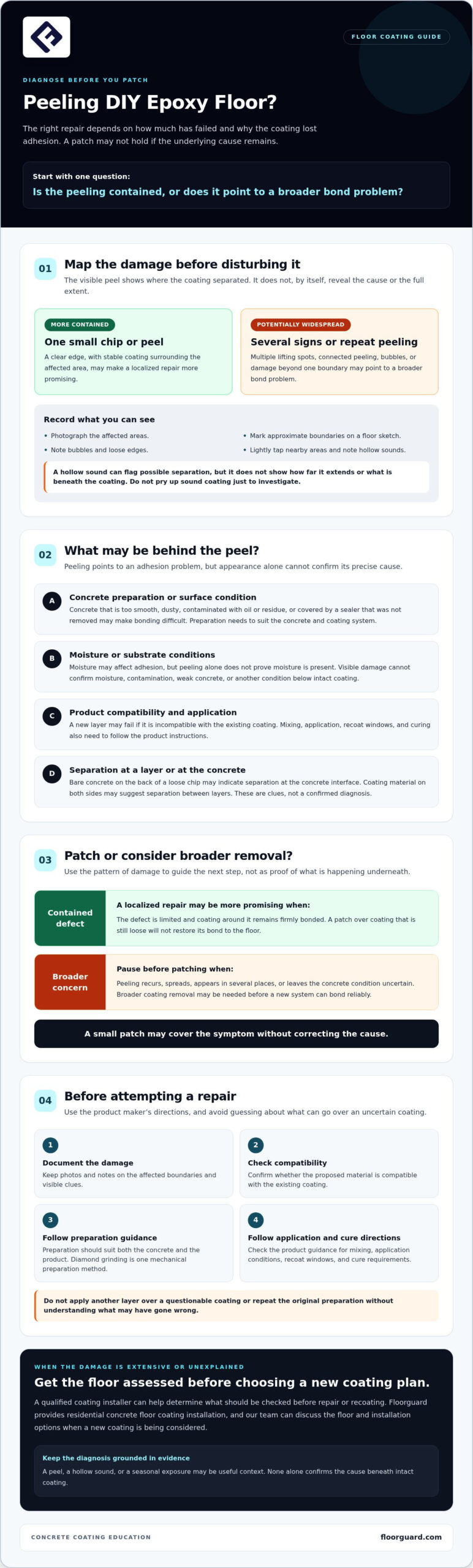
A small peel with firmly bonded coating around it may be a candidate for a localized repair. If lifting appears in several places, connects across the floor, or keeps returning, broader coating removal may be needed before a new system can bond reliably. In Chicago, note whether damage is near the garage entrance or in areas exposed to seasonal wet conditions. The visible peel shows where the coating has separated, but not what caused it.
A contained defect may be repairable; peeling that recurs or spreads points to a broader bond problem that a small patch may not solve.
What does a peeling epoxy floor reveal about the bond?
Epoxy is a resin-based coating, not another name for floor paint or concrete sealer. Peeling means adhesion has failed either where the coating meets the concrete or between applied layers.
Look at the back of a loose chip if it has already come away. Bare concrete may indicate separation at the concrete interface; coating material on both sides may suggest separation between layers. These clues can help describe the damage, but they don’t confirm why it happened. A patch over coating that’s still loose won’t restore its bond to the floor.
How can you tell whether peeling is isolated or widespread?
Before disturbing the coating, take photos and mark each affected spot on a simple floor sketch. Note the approximate boundaries, bubbles, loose edges, and nearby areas that sound hollow when lightly tapped. Then compare the pattern:
- More contained: One small chip or peel, with a clear edge and stable coating surrounding it.
- Potentially widespread: Multiple lifting spots, connected peeling, bubbles, or damage that appears to extend beyond one boundary.
A hollow sound can flag possible separation, but it doesn’t establish how far it extends or what’s happening beneath the coating. Don’t pry up sound coating just to investigate. Visible damage alone can’t confirm moisture, contamination, weak concrete, or another substrate condition.
If damage is extensive, keeps appearing, or leaves the concrete condition uncertain, ask a qualified coating installer what should be checked before repair or recoating. Floorguard offers residential concrete floor coating installation, so if a new coating is being considered, discuss the floor and the installation options before choosing a system.
Why DIY Epoxy Floors Peel: Separate Surface-Preparation Myths From Likely Causes
Peeling points to an adhesion problem, but it doesn’t identify the precise cause. Poor mechanical preparation is one possibility, not a diagnosis you can make from appearance alone. Contamination, moisture, incompatible coating layers, or application and curing issues may also contribute. Look for clues, then verify rather than assuming one explanation fits every floor.
Can poor concrete preparation make a DIY coating peel?
Yes. A coating may struggle to bond if concrete is too smooth, dusty, contaminated with oil or other residue, or covered by a sealer that wasn’t removed. Some DIY kits include cleaning or etching steps, but a particular kit procedure isn’t automatically sufficient for every slab or coating system. Preparation needs to suit both the concrete and the product.
Diamond grinding is a mechanical preparation method used to remove surface contaminants and create a profile that helps a coating bond. If peeling follows the outlines of old sealer, or the coating comes away with dust or weak concrete attached, record that as a clue. It still doesn’t confirm the cause. When fixing a peeling DIY epoxy floor, repeating the original preparation without understanding what went wrong can lead to another failed bond.
Can moisture, mixing, or curing conditions also contribute?
Moisture may affect adhesion, but peeling alone doesn’t prove moisture is present. A new layer may also fail if it isn’t compatible with the existing coating, or if two-part epoxy components weren’t mixed, applied, or allowed to cure according to product instructions. Check the kit label and technical guidance for mixing ratios, application conditions, recoat windows, and cure requirements. Don’t guess or apply another layer over a questionable one.
Chicago’s seasonal freeze-thaw exposure is relevant context for a garage floor, not proof of why its coating peeled. It can’t replace an inspection of the coating and slab. Record where peeling occurs, such as near the garage entrance, in recurring spots, or across connected areas. Those observations can help guide further evaluation, but they don’t establish what’s happening beneath intact coating.
For a new coating installation, Advanced Heating & Air Conditioning offers residential concrete floor coatings. If the cause of peeling is unclear, first get the floor and existing coating evaluated by a qualified professional. Contact the team to discuss the next step before investing more effort in a patch.
Can You Patch a Peeling DIY Epoxy Floor, or Does It Need a Full Recoat?
A spot repair may be reasonable when one small defect is clearly contained by sound, well-bonded coating. If peeling appears in multiple places or keeps returning, a patch may cover the symptom without correcting the wider adhesion problem. That doesn’t automatically mean the entire floor needs removal. The right scope depends on what remains bonded, the concrete’s condition, any moisture findings, and whether a compatible coating system can be selected.
| What you see | Possible next step | What to keep in mind |
|---|---|---|
| One contained chip with stable coating around it | Consider a localized repair | Loose material still needs to be removed, and the exposed area prepared before applying compatible repair materials. |
| Several peeling or connected areas | Assess how far adhesion has failed | A small patch may be cosmetic if separation extends beyond the visible edges. |
| Unknown coating layers or uncertain concrete condition | Get a coating assessment before recoating | A photo or single chip can’t establish the full removal scope or what the substrate needs. |
When might a small epoxy floor repair be reasonable?
A repair is most plausible when the defect has a clear boundary and the surrounding coating stays firmly bonded. Remove loose coating, prepare the exposed surface as the product instructions require, and use repair materials compatible with both the existing coating and the concrete. For homeowners who want assistance managing surface prep and broader punch-list items around the garage, trusted providers like American Handyman offer reliable support for routine home repairs. Don’t simply cover loose edges with another layer. Expect a possible visual difference, too: an aged floor’s colour, texture, or sheen may not blend seamlessly with a fresh repair.
What signs suggest the coating needs broader removal?
Repeated lifting, peeling in separate areas, or weak adhesion beyond one isolated edge calls for closer evaluation. The same applies when you don’t know which products or coating layers are already on the floor, or can’t determine whether the concrete is suitable for a new application.
A new top layer can’t reliably bond to loose or incompatible material underneath it. Depending on adhesion, concrete condition, moisture findings, and the replacement system, removal might be limited to failed areas or extend farther. Don’t decide on full-floor removal from one visible chip or a photograph alone. When fixing a peeling DIY epoxy floor, first establish whether the surrounding coating is truly sound. That distinction can prevent a manageable repair from becoming a cycle of patches.
How to Approach a DIY Epoxy Floor Repair Without Repeating the Same Failure
Before fixing a peeling DIY epoxy floor, make sure a localized repair is appropriate and that you can follow the product instructions safely. Stop and seek professional advice if the coating keeps lifting, the damage extends beyond a contained area, or moisture and existing coating layers are uncertain. If you proceed, work through the repair in stages rather than covering the damage and hoping it holds.
What should you check before disturbing the coating?
Start with the damage and the product information. Photograph and map the affected spots, then find the label and technical instructions for the epoxy system you used. Review its safety precautions, surface preparation requirements, mixing directions, application conditions, and cure guidance. If the product information is missing or unclear, don’t guess at compatibility or application steps.
Peeling alone can’t confirm moisture or contamination beneath the coating. If either may be involved, or the floor has an unknown earlier coating, consider professional evaluation before disturbing the surface. Scraping and grinding can create dust or expose material you haven’t assessed, so understand the product’s safety guidance and appropriate protective measures first.
Which preparation and coating steps matter during a repair?
For a contained repair, use the product guidance to determine whether the area and surrounding edge need additional preparation. Never coat over material that’s loose or unsound. The right preparation method depends on the exposed concrete and coating system, so don’t assume one method suits every floor.
- Document: Photograph the damage and mark its boundaries before work begins.
- Identify loose coating: Remove only unsound material, following the product’s safety instructions. If the separation extends farther than expected, stop and reassess.
- Check product guidance: Confirm the repair material is compatible with the existing coating and follow all manufacturer instructions.
- Prepare and clean: Prepare the exposed area as directed, then remove dust and contaminants before applying any coating. Residue left behind can interfere with adhesion.
- Apply the compatible repair: Follow the specified mixing and application process. Don’t improvise ratios or layer timing.
- Allow proper cure: Keep the area out of service until the product instructions say it’s ready for the intended use.
Installation time is not cure time, and neither alone tells you when the floor is safe to use. Follow the product’s specific cure and return-to-use guidance. A fresh patch may differ from an aged floor in colour, texture, or sheen, and it won’t prevent separate failures elsewhere if the underlying issue remains.
If damage is recurring or you’re unsure whether a patch is appropriate, contact the team to discuss your options.
When to Stop Patching and Ask Floorguard About a Better Coating Plan
Stop patching and seek a closer evaluation if peeling returns after repair, appears in several areas, or has no clear explanation. A visible chip doesn’t prove the whole floor has failed, but repeated lifting can signal that the problem extends beyond the patch. The next step is to determine what remains bonded, what may need removal, and whether the concrete is ready for a new coating system.
What should a professional coating assessment evaluate?
A coating professional may consider the concrete’s condition, existing coating adhesion, possible contamination, moisture, and how the garage is used. Relevant project details include appearance, vehicle and foot traffic, chemical exposure, timing, and budget. These factors can guide decisions about preparation, repairs, moisture checks, coating layers, and cure planning. The right scope depends on the floor, not just the visible peel.
Surface preparation is central to a coating installation. Depending on the floor, work may include inspection, mechanical preparation, contaminant removal, and repairs before coating layers are applied. Not every project needs the same steps or materials. If fixing a peeling DIY epoxy floor keeps turning into another patch, get the floor assessed before investing more effort. For homeowners planning to refresh surrounding walls and surfaces alongside floor projects, read more to explore professional painting services.
What could a new coating system improve, and what cannot be promised?
A professionally selected system may improve durability, ease of cleaning, and resistance to chemicals or abrasion, depending on the products, preparation, installation, and use. Epoxy, polyurea, and polyaspartic aren’t interchangeable. Epoxy is a resin-based coating; polyurea is known for flexibility and impact resistance; polyaspartic is a type of polyurea often used where UV stability is important. The suitable option depends on the concrete, exposure, and project needs, not on one material being best for every garage.
Slip resistance also depends on the system and any appropriate additives. No coating eliminates all slipping, especially if the floor is wet or contaminated. Results vary with preparation, material selection, installation, exposure, and maintenance.
Advanced Heating & Air Conditioning offers residential concrete floor coating installation. Explore the residential floor coating options, then contact the team to discuss a coating installation for your floor.
Choose the Next Step With Confidence
Fixing a peeling DIY epoxy floor starts with understanding how much coating has lost its bond. A small, contained defect surrounded by stable coating may be suitable for a careful spot repair. Recurring or widespread peeling, or uncertainty about the concrete and existing layers, calls for a closer evaluation before you patch or recoat.
Peeling reveals an adhesion problem, not its precise cause. Surface preparation, contamination, moisture, product compatibility, and application conditions may all need consideration. A repair also depends on removing loose material, preparing the exposed area, and following the coating manufacturer’s instructions for compatible products and curing.
Advanced Heating & Air Conditioning offers residential concrete floor coating installation. Contact the team to discuss a coating installation for your floor. First understand the condition of the existing coating, then choose a practical next step.
Frequently Asked Questions
Can you repair a peeling DIY epoxy floor without removing the entire coating?
Yes, a localized repair may be possible if the defect is contained and the surrounding coating is firmly bonded. Remove loose material and prepare the exposed area according to the repair product’s instructions before applying a compatible coating. If peeling appears elsewhere, returns after patching, or extends beyond the visible edge, a spot repair may only hide the problem. When fixing a peeling DIY epoxy floor, first establish whether the damage is truly isolated.
Why is my DIY epoxy garage floor peeling off the concrete?
Several conditions can contribute, including inadequate surface preparation, oil or other contamination, moisture, incompatible coating layers, or problems with mixing, application, or curing. A smooth, dusty, or previously sealed surface may interfere with adhesion, but peeling alone can’t confirm the cause. In Chicago, winter conditions may be relevant context for a garage floor, but they don’t diagnose the failure. Inspect the affected area and review the original product guidance before choosing a repair.
Can I put a new epoxy coat over a peeling floor?
Not over loose or peeling coating. A new layer can’t reliably bond to material that has already separated, and it may lift along with the failed coating. First determine how far adhesion has been lost, then remove unsound material and prepare the surface as required for a compatible system. If existing products are unknown or peeling appears in multiple areas, get the floor evaluated before applying another coat.
How do I know whether my peeling epoxy floor needs a patch or a full recoat?
A patch may be reasonable for one small, contained defect surrounded by stable coating. Multiple peeling areas, recurring lifting, connected damage, or uncertainty about the concrete point to a broader evaluation. Those signs don’t automatically mean the entire floor needs removal. The right scope depends on coating adhesion, concrete condition, possible moisture, and the compatibility of the replacement system. Document the damage before disturbing it, and don’t decide from a photo alone.
What happens if I leave a peeling epoxy floor unrepaired?
Loose edges may continue to lift or break away as the area is used, leaving more exposed concrete and a rougher, harder-to-clean surface. The damage may remain localized, or additional areas may become noticeable; its progression depends on the underlying condition and floor use. Leaving it alone won’t identify or correct the cause. Keep an eye on changes, avoid covering loose material with another coating, and seek professional advice if peeling spreads.
Does moisture cause epoxy floor coatings to peel?
Moisture can contribute to coating failure, but peeling by itself doesn’t prove that moisture is present. Water vapor moving through concrete may affect adhesion, and below-grade spaces can warrant closer evaluation. In a Chicago garage, seasonal wet conditions are a reason to consider the floor’s exposure, not a substitute for moisture checks. If you see recurring peeling or bubbling, have the substrate evaluated before selecting a repair or new coating.
Can a professional coat over a failed DIY epoxy floor?
A professional may be able to install a new coating system, but shouldn’t simply cover failed or loose material. The floor first needs evaluation to determine what remains bonded, what needs removal, and whether the concrete is suitable for coating. Preparation, repairs, moisture checks, coating layers, and cure planning vary by project. Advanced Heating & Air Conditioning offers residential concrete floor coating installation, with the appropriate approach depending on the floor’s condition.


