
The right industrial floor coating for chemical resistance depends on what reaches the floor, its concentration and temperature, and whether exposure is a brief spill, repeated splash, or prolonged contact. For Chicago facilities, a system suited to one process may not suit another, even within the same building.
Choosing a coating can feel uncertain, especially when a mismatch could damage concrete or interrupt operations. The system must also fit the slab’s condition, moisture levels, traffic, and installation schedule.
In this guide, we explain which exposure details matter, how to assess the concrete, and how to compare epoxy, polyurea, and polyaspartic systems without treating one as the answer for every facility. We also cover preparation, product documentation, and planning installation and cure time around operations. At Floorguard, we design and manufacture our polyurea and polyaspartic systems and install them professionally, with epoxy also available. The goal is a coating recommendation grounded in your facility’s actual conditions, not a broad claim of universal chemical protection.
Key Takeaways
- Match a coating to the chemicals it will actually face, including concentration, temperature, and whether contact is a spill, repeated exposure, or immersion.
- Compare epoxy, polyurea, and polyaspartic by your facility’s conditions and operating needs, not by assuming one system is always best.
- Build an exposure profile with chemical names, contact frequency and duration, and spill-response procedures before evaluating an industrial floor coating for chemical resistance.
- Plan downtime around the full project sequence: concrete checks, repairs, diamond grinding, coating application, curing, and return to service.
- Floorguard connects coating design, manufacturing, and professional installation, backed by 35+ years of experience and Over 30 million sq ft installed.
What Does Chemical Resistance Mean for an Industrial Floor Coating?
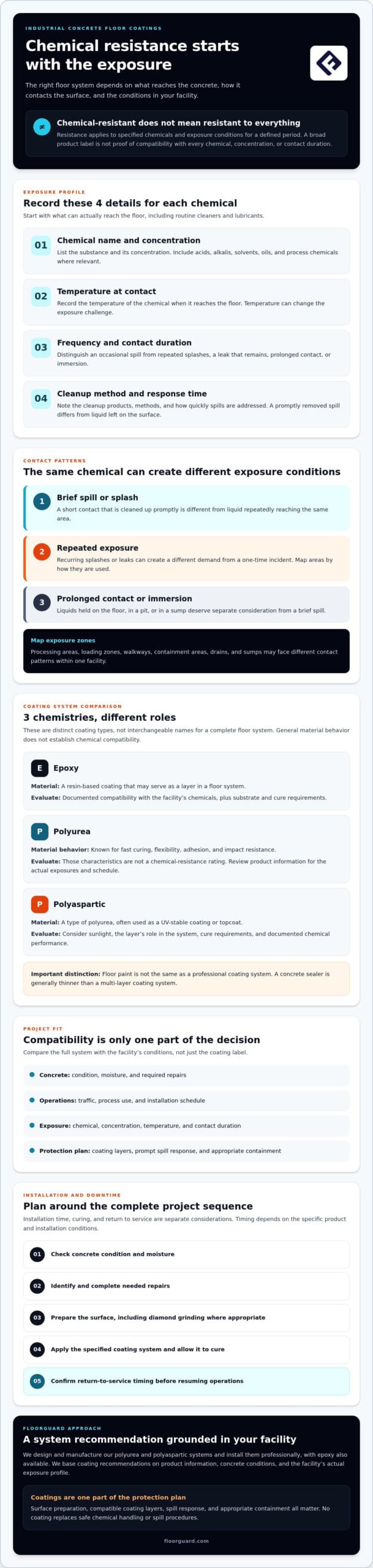
A coating’s chemical resistance is specific to the substances and conditions it has been evaluated to withstand. It isn’t a promise that the floor can resist every chemical in every situation. In practical terms, chemical resistance is a coating system’s ability to withstand specified chemical exposures for a defined period without unacceptable damage.
That distinction matters in machine shops, where a brief splash of cutting fluid differs from repeated spills, a solvent left on the floor for hours, or a liquid held in a sump. Concentration and temperature also affect exposure. A diluted cleaner that’s quickly removed may present a different challenge from a concentrated process chemical that sits on the surface. General background on chemical resistance can help explain the material-science concept, but a floor system’s suitability depends on its own technical information and your actual conditions.
Bare concrete can absorb liquids through its pores. Depending on the substance and contact conditions, chemicals may stain or damage the surface. A coating can help protect concrete and make the floor easier to clean, but it’s only one part of a broader protection plan. Surface preparation, compatible coating layers, prompt spill response, and appropriate containment all matter. No coating should be treated as a substitute for safe chemical handling or spill procedures.
For an industrial floor coating for chemical resistance, begin with the exposure rather than the coating label. A product described broadly as chemical-resistant may not be suitable for every chemical, concentration, or duration of contact.
Which chemical exposures should a facility identify first?
Start by listing what can reach the floor. Group substances by type, such as acids, alkalis, solvents, oils, and process chemicals. Then describe how each one contacts the concrete. A splash that’s cleaned up promptly differs from a recurring leak, prolonged contact, or immersion in a pit or sump.
Ask operators and maintenance teams to record:
- Chemical name and concentration
- Temperature at the time of contact
- Frequency and likely duration of exposure
- Cleanup products, methods, and response time
These details give your coating evaluation a practical starting point. Include routine cleaners and lubricants, not only the most hazardous process chemicals.
Where does chemical-resistant industrial flooring matter most?
Processing and manufacturing areas, laboratories, workshops, and chemical storage spaces may all need careful coating selection. Exposure can vary within one facility: loading areas may encounter leaking containers, containment zones may hold spills longer, and walkways may see only occasional drips. Sumps and drains deserve separate attention because liquids can collect there.
Map these zones before planning the floor system. Our commercial concrete coating services support facility flooring projects where concrete condition, use, and exposure inform the coating plan.
Epoxy, Polyurea, or Polyaspartic: Compare Industrial Coating Systems
Epoxy, polyurea, and polyaspartic describe different coating chemistries, not interchangeable names for a complete floor system. Each can play a different role, and none should be treated as the automatic choice for a machine shop. Start by comparing the concrete, exposure conditions, traffic, and operating schedule, then check whether the proposed materials fit those needs. The Association for Materials Protection and Performance offers a useful overview when comparing epoxy, polyurea, and polyaspartic coatings.
What can each coating type contribute to an industrial floor?
Use the distinctions below to guide questions about system design, not to assume chemical compatibility. Paint is not equivalent to an epoxy coating, and a concrete sealer is generally thinner than a multi-layer coating system.
| Coating type | Typical role and considerations | What to evaluate |
|---|---|---|
| Epoxy | A resin-based coating that may serve as a layer in a floor system. Cure and return-to-service timing depend on the particular product and installation conditions. | Confirm the system’s documented compatibility with the facility’s chemicals, as well as substrate and cure requirements. |
| Polyurea | Known for fast curing, flexibility, adhesion, and impact resistance. These characteristics describe material behavior, not a chemical-resistance rating. | Review product information for the specific exposures and confirm the application schedule works for the facility. |
| Polyaspartic | A type of polyurea often used as a UV-stable coating or topcoat. Its function depends on how it is incorporated into the system. | Consider sunlight, the role of the layer, cure requirements, and documented chemical performance. |
At Floorguard, we offer polyurea and polyaspartic systems, along with epoxy flooring as a coating type. For any industrial floor coating for chemical resistance, base the recommendation on product documentation for the full system and the facility’s actual exposure profile. A material’s general reputation does not establish its compatibility with a particular process chemical.
Which project conditions influence the system choice?
System selection also depends on the concrete’s condition and moisture, sunlight, vehicle and foot traffic, appearance preferences, project timeline, and budget. For example, a sunlit entrance may call for different topcoat considerations than an interior production area. A busy machine aisle may put more emphasis on abrasion and impact needs, while a process zone requires careful attention to chemical exposure.
Layers and finishes can vary. A project may use a basecoat with a protective topcoat, while other conditions call for a different build. We tailor our industrial coating recommendations to the project rather than assigning a universal winner. Discuss your machine shop’s coating needs with our team to consider the concrete, operating conditions, and available system information together.
How to Evaluate Chemical Compatibility Before Choosing a Floor Coating
Once your facility has documented its exposures, organize the information so it can be compared against coating-system evidence. Keep records tied to the floor areas and processes they describe. This makes it easier to spot missing details, review proposed systems consistently, and revisit the decision if operations change.
What information belongs in a chemical exposure profile?
Use current safety data sheets and facility records as source documents, but don’t treat a safety data sheet as proof that a coating is compatible. It describes the substance and its handling hazards, not how a specific floor system performs against it. Record where each source came from and when it was last reviewed, then ask the staff responsible for purchasing, production, and maintenance to check that the facility inventory reflects current practice.
Build a concise, area-specific file that can be updated as processes change:
- Identify the responsible area or process owner. This gives the project team a clear contact for correcting or updating information.
- Keep source documents together. Link each floor zone to the relevant safety data sheets and facility records.
- Mark gaps for follow-up. Note substances or work areas for which records are incomplete, outdated, or unclear.
- Record changes over time. Revisit the profile when production, cleaning products, or material-handling practices change.
A maintained record is more useful than a one-time list. It also gives the team a clear basis for reviewing future coating work or investigating an unexpected surface change.
How should buyers compare compatibility information?
Compare the facility record with documentation for the complete proposed coating system, rather than relying on a general description of its resin chemistry. Check that the information applies to the specific system and its layers. Where test reports or compatibility tables are available, review their stated conditions and limitations. Results from a controlled test can inform a decision, but they don’t automatically predict performance under every field condition.
- Confirm that the documentation names the proposed coating system, not only a broad material category.
- Check whether any stated limitations affect the intended floor area or use.
- Keep the reviewed documents with the project scope and coating recommendation.
- Resolve missing or unclear evidence before finalizing the system selection.
This organized review makes an industrial floor coating for chemical resistance decision a documented project choice. It also gives facility and maintenance teams a consistent reference if products or processes change later.
What Installation and Downtime Planning Should Include
A coating project has several separate timelines: defining the scope, preparing the concrete, applying materials, allowing them to cure, and returning the area to service. Treating these as one duration can leave a machine shop without enough time to relocate equipment or protect production schedules. For Floorguard systems, Install time 1-3 days depending on system. Curing and return-to-service timing are separate and depend on the selected system and project conditions.
Plan the work zone before installation begins. Identify which machines, vehicles, and materials need to move, where staff can safely travel, and whether the floor can be divided into sections. Confirm access restrictions and coordinate the sequence with production, maintenance, and safety teams. A clear plan helps prevent rushed equipment moves or foot traffic across a surface that still needs to cure.
How does concrete preparation affect a coating project?
Coatings need properly assessed and prepared concrete. Inspection helps identify conditions that may affect application or adhesion, while mechanical preparation, often diamond grinding, creates a suitable surface profile. Industry installers such as Masterclass Epoxy Floors & Training emphasize that thorough mechanical profiling is critical for resinous adhesion and long-term durability. The work required varies with the slab and project scope, so establish preparation needs before finalizing the schedule.
A typical assessment considers:
- Concrete condition, including cracks, pits, and surface wear that may need repair as part of the coating project
- Moisture conditions that could affect the selected system or application plan
- Existing coatings or other materials that may need evaluation before preparation
- Oil, process residue, and other contaminants that could interfere with coating adhesion
After repairs and grinding, the prepared floor must be cleared of dust and contaminants before coating begins. Skipping or underestimating this work can disrupt the schedule and compromise the surface the system depends on. Preparation is part of planning a reliable installation, not an optional add-on.
How can a facility plan around installation and curing?
Build the schedule around the actual system and slab, not a generic promise of immediate use. The coating sequence may include a basecoat, optional decorative flakes or pigments, and a protective topcoat, followed by curing. Layers and application steps vary by project. Confirm the cure requirements and return-to-service timing for the specified system before scheduling equipment and production activity back into the area.
Coordinate these decisions with the installation team:
- Which floor sections will be closed, and how access will be managed
- When equipment must be removed and when it can be moved back
- How staff will be kept out of the work zone during application and curing
- Who will confirm the area is ready before normal operations resume
A professional assessment can connect the concrete’s condition, coating sequence, and operating calendar. Contact our team to plan your machine shop floor coating project. A defined handoff helps the facility return to work in an orderly way once the specified cure requirements are met.
How Floorguard Approaches Industrial Floor Coating Projects
An industrial coating project should connect the facility’s needs with the concrete, coating system, and installation plan. At Floorguard, we design, produce, and install our proprietary coating systems. That manufacturer-installer model brings system design and professional application together, while keeping the recommendation grounded in the project rather than a broad promise of chemical compatibility.
Our experience includes 35+ years of experience and Over 30 million sq ft installed. Those milestones reflect work across many concrete coating projects, but no two industrial floors are automatically alike. A recommendation for an industrial floor coating for chemical resistance must take the facility’s documented exposures and operating conditions into account.
What does Floorguard bring to an industrial coating project?
We install our polyaspartic floor coating system and polyurea floor coating system, and manufacture our products in the United States. We also offer epoxy flooring as a coating type. The system selection and project scope depend on the slab, use, and facility requirements. Our commercial flooring services include coating work for business and industrial spaces.
Material names alone don’t establish how a floor will perform against a particular process chemical. We consider the concrete condition, square footage, chosen system, and project needs, alongside the chemical exposure information available for evaluation. Any compatibility assessment should be tied to the actual product documentation and exposure conditions, not a claim that one system resists every chemical.
What happens when a facility requests a project discussion?
Bring information that describes the floor and how your team uses it. A useful starting point includes facility operations, the chemical list and exposure patterns, visible concrete concerns, affected work zones, and scheduling needs. Details such as whether the floor sees occasional splashes or recurring spills can help define the project scope. Share what you know, even if some conditions still need to be assessed on site.
Our team considers the slab and installation requirements along with your operating schedule. Preparation may include inspection, moisture and existing-coating checks, repairs tied to the coating project, mechanical preparation, and dust removal. The scope depends on the floor’s condition, so the assessment helps establish which steps and coating layers are appropriate rather than assuming every project follows an identical sequence.
Project pricing depends on the concrete condition, square footage, and chosen system. Sharing those details helps shape a project-specific estimate and a practical plan for installation and return to service. We can discuss the system and installation approach without overstating chemical performance.
Ready to discuss an industrial coating project? Contact our team to review your facility’s floor condition, chemical exposures, and scheduling needs.
Plan for the Floor Your Facility Will Need Next
A coating decision should account for more than today’s production routine. If your machine shop changes chemicals, equipment, cleaning practices, or work-zone use, revisit the floor’s exposure profile. That helps keep future maintenance and coating decisions connected to actual conditions, rather than assumptions made before operations changed.
Our limited lifetime warranty covers peeling, delamination, and wear, subject to its maintenance requirements, including cleaning at least four times per year with warm water and dish soap. It’s one part of a project conversation, alongside the concrete condition, chosen system, and facility’s documented exposures. A recommendation for an industrial floor coating for chemical resistance should be based on those project-specific details, not a promise that any coating withstands every chemical.
Ready to plan a coating system around your facility’s needs? Request an industrial floor coating assessment from our team. With a clear picture of your operations and priorities, you can take the next step with greater confidence.
Frequently Asked Questions
Is epoxy flooring always suitable for chemical processing areas?
No. The word “epoxy” alone can’t establish whether a particular floor system fits a processing area. Base the decision on documentation for the specific system and the facility’s intended use. Before approving a project, clarify who will review the technical information and retain the selected system details with facility records. That gives operations and maintenance teams a consistent reference after installation.
Can polyurea or polyaspartic coatings resist every industrial chemical?
No coating should be assumed compatible with every industrial chemical. Compare the chemical manufacturer’s information with the coating system’s documentation, including any stated limitations. Keep the reviewed documents accessible to staff responsible for floor care and spill response. This helps prevent a general material description from being mistaken for approval of a particular chemical or process.
How do I know which chemicals my floor coating must withstand?
Review the materials actually used in the facility, including products introduced through substitutions or new suppliers. In a Chicago, Illinois machine shop, purchasing and production staff can help catch changes that may not appear in older floor-project records. Compare the current inventory with information from the people who handle each product, then preserve the updated list for future coating decisions and maintenance planning.
What happens if chemicals spill on a coated concrete floor?
The coating’s response depends on the specific product and contact conditions, so don’t assume a spill is harmless because the floor is coated. Follow the facility’s established safety and spill-response procedures first. Once the area is safe, document the incident and note any visible change to the coating. That record can help the facility assess the floor and determine whether follow-up is needed.
Does chemical-resistant flooring require special maintenance?
Follow the selected system’s care instructions and keep a simple record of inspections, cleaning, and any visible changes. Pay attention to areas around machinery, storage points, and transitions where wear or residue may be easier to overlook. If the floor’s appearance or surface changes, document the location and timing so the information is available during maintenance review. Avoid using harsh chemicals for cleaning; use only warm water and mild dish soap.
How long does an industrial floor coating project take?
Install time 1-3 days depending on system. Installation duration is not the same as cure time or permission to resume normal use. In rooms above 70°F, wait 2 full days before normal use. In rooms at or below 70°F, wait 3 full days. Build those periods into the production plan before scheduling staff, vehicles, or equipment to return.
How much does industrial floor coating cost?
Pricing depends on the concrete condition, square footage, and chosen system. A project estimate is based on the specific floor and coating scope, rather than a universal rate. To support an accurate assessment, provide the facility layout and describe the areas included in the project. Our team can then discuss the coating work and estimate for your industrial floor without relying on a generic price range.


