
Could the coating you like best be the wrong first step for your basement floor? The right basement floor coating options for uneven floors depend on what is causing the unevenness and how pronounced it is. For Chicago, Illinois, homeowners planning a basement coating, it is natural to wonder whether the system will bond well and look right on an irregular slab.
At Floorguard, we start with the concrete, not just the coating. We assess the floor’s condition and moisture, then determine what preparation is needed before recommending a system. Minor surface variation may be manageable with appropriate preparation, while more substantial unevenness may need attention before coating can begin. This guide explains how to distinguish surface variation from a bigger concern, compare coating options, and understand the inspection and preparation steps that support a sound bond and an attractive finish.
Key Takeaways
- Use the pattern and extent of unevenness to help distinguish minor surface variation from a slope or possible movement.
- Compare basement floor coating options for uneven floors only after assessing the concrete’s condition and moisture.
- Understand how epoxy, polyurea, and polyaspartic differ, then weigh their characteristics against your basement’s needs.
- Document uneven areas and consider how you use the room before choosing a coating system and finish.
- Our team’s assessment and preparation guide project-specific recommendations, informed by more than 35 years of experience and our in-house manufacturing.
Can You Coat an Uneven Basement Floor?
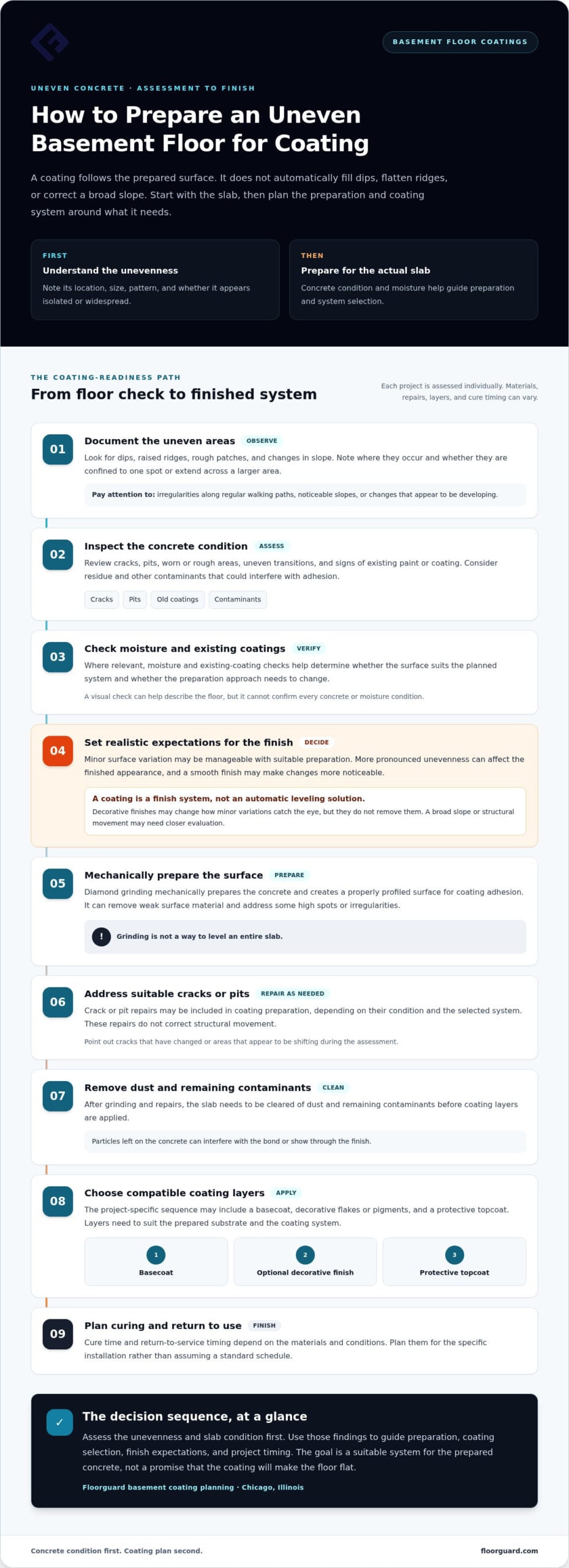
Yes, some uneven basement concrete can be coated after assessment and suitable preparation. First, determine what kind of variation the floor has. A coating follows the prepared surface, so it will not automatically fill a dip, flatten a ridge, or correct a slope. The right approach depends on the slab’s condition and the finish you want.
Minor texture changes may be manageable during preparation, while pronounced unevenness can affect the finished appearance. Smooth finishes may make surface changes more noticeable. Decorative finishes can change how minor variations catch the eye, but they will not remove them. We assess the concrete before recommending a system, so you know what finish is realistic for the floor.
Our residential basement floor coatings are planned around the concrete and the room’s intended use. The goal is to select a suitable coating system for the prepared slab, not to promise that a coating will make uneven concrete flat.
What kinds of unevenness matter before coating?
Look for dips, raised ridges, rough patches, or changes in slope across the basement. Note where they occur and whether each irregularity is isolated or spans a larger area. A small rough spot in a corner presents a different consideration from a long transition across a regular walking path.
Location, size, and cause all inform the coating plan. A visual check can help you describe what you see, but it cannot confirm every concrete or moisture condition. Pronounced changes, or changes that appear to be developing, call for closer assessment before coating.
Will a basement coating make the floor level?
No. A coating is a finish system, not an automatic floor-leveling solution. Preparation and repairs related to the coating project may address certain surface defects, but they do not necessarily remove a broad slope or correct structural movement.
Point out cracks that have changed, areas that appear to be shifting, or a noticeable slope during an assessment. In cases where significant shifting or underlying moisture issues are present, consulting a remediation and stabilization specialist like Foundation ResQ can help resolve structural concerns before proceeding. These signs do not establish the cause on their own, but they help guide a careful review before coating. That discussion sets clearer expectations for the finish and helps determine whether the slab is ready for a coating system.
How Do Surface Condition and Preparation Affect Basement Coating Results?
Assess the concrete before choosing a coating material or finish. Two basement slabs can look similarly uneven yet need different preparation because of differences in concrete condition, moisture, old coatings, or contaminants. Those details affect whether the system can bond as intended and what needs to happen before application. The concrete industry standards offer a broader reference for concrete practices, but the preparation plan still needs to fit the actual slab and coating system.
When comparing basement floor coating options for uneven floors, treat the surface as part of the decision, not a detail to address after choosing a color. Our team checks the slab and uses the findings to guide preparation and coating recommendations for the space.
What happens during a basement slab assessment?
We look for cracks, pits, worn or rough areas, uneven transitions, and signs of existing paint or coating. We also consider contaminants that could interfere with adhesion, such as residue or substances absorbed into the concrete. Where relevant, moisture and existing-coating checks help determine whether the surface suits the planned system and whether the preparation approach needs to change.
The assessment connects visible conditions to the coating plan. A shallow pit, a loose old coating, and a crack may each call for a different response. Inspection also helps distinguish a surface defect from a broader slope or condition that needs closer evaluation. No single visual observation tells the whole story.
Why do grinding and repairs matter on uneven concrete?
Diamond grinding mechanically prepares the concrete, creating a properly profiled surface for coating adhesion. As seen across professional flooring and restoration services like Restore-A-Floor, thorough surface preparation and grinding can remove weak material and smooth minor high spots, though it is not designed to level an entire slab. Crack or pit repairs may also be part of coating preparation, depending on their condition and the system, but they will not correct structural movement.
After grinding and repairs, dust and remaining contaminants need to be removed before coating layers go down. Particles left on the slab can interfere with the bond or show through the finish. Skipping careful cleanup can undermine otherwise sound preparation.
Once the concrete is ready, the coating sequence depends on the project. It may include a basecoat, decorative flakes or pigments, and a protective topcoat. Each layer needs to be compatible with the prepared substrate and applied according to the system’s requirements. Cure time and return-to-service timing depend on the materials and conditions, so we plan them for the specific installation rather than assume a standard schedule.
Our residential coating work begins with the slab and the room’s needs, then moves to preparation and system selection. For an uneven basement, explore our residential concrete coating services or ask our team to assess your basement floor.
Which Coating Options Suit an Uneven Basement Floor?
Epoxy, polyurea, and polyaspartic can all be considered for basement concrete, but they are not interchangeable, and none automatically corrects an uneven slab. The right system depends on the concrete’s condition, moisture findings, room use, appearance goals, exposure, and installation schedule. Preparation comes first: a coating applied over an unsuitable or poorly prepared surface may not perform as intended, regardless of material.
For basement floor coating options for uneven floors, separate two decisions: what the slab needs before coating, and which system best fits the room once the substrate is ready. The coating affects protection and finish. Preparation addresses surface conditions that could interfere with the bond or final appearance.
When might epoxy, polyurea, or polyaspartic be considered?
Epoxy is a resin-based coating. It may suit a basement when the slab’s condition, moisture results, intended use, and desired finish align with the selected system. Judge its suitability by the full project requirements, not the material name alone.
Polyurea is known for flexibility, adhesion, and impact resistance, and it often cures quickly. These characteristics can suit projects with specific performance or scheduling needs, but a fast cure also means the installation plan must account for application and return-to-use timing.
Polyaspartic is a type of polyurea. It is often used when UV stability is a priority or as a protective topcoat in a layered system. A basement with limited sunlight may have different exposure considerations from one with large windows or a walkout entrance. The system’s role and compatibility with other layers matter as much as the material category.
How do finish and basement use shape the choice?
Consider how the room functions day to day. A finished recreation room, storage area, and workspace may have different needs for appearance, cleanup, and foot traffic. Decorative flakes or pigments can add color and texture, while a solid-color finish creates a more uniform look. Decorative finishes can affect how small surface variations catch the eye, but they do not flatten the concrete.
- Finished living space: Consider the desired appearance, lighting, regular foot traffic, and how the coating will coordinate with the room.
- Storage or utility use: Focus on the concrete’s condition, expected wear, and the protection and cleanup needs of the space.
- Sunlight or changing conditions: Account for UV exposure near windows or entrances, moisture findings, and the coating system’s requirements.
Timeline and budget also shape the recommendation. A faster-curing material may suit a tighter schedule, but cure time is not the same as the time until the basement can return to use. Compare the complete system, including preparation, coating layers, and curing, rather than choosing by the base material alone. We match our basement coating recommendations to the slab and project priorities so the finish and system work together.
What Should You Do Before Coating an Uneven Basement Floor?
A little planning can make a coating assessment more useful and clarify the next step. Before choosing among basement floor coating options for uneven floors, document what you see, decide how you will use the room, and have the slab assessed. The goal is to distinguish surface irregularities that may be addressed during coating preparation from a pronounced slope or signs of possible movement that need closer evaluation.
How can you describe the floor before an assessment?
Walk the room and note where dips, humps, cracks, rough areas, or changes in slope appear. Record whether each concern is isolated or extends across a larger area. Then describe the room’s intended use, expected foot traffic, sunlight exposure, and your preferred finish. These details help frame a practical project discussion, but they do not replace an in-person inspection of the concrete.
Use this simple preparation list:
- Document the surface: Mark uneven areas on a basic room sketch and note visible cracks or changes you have noticed over time.
- Describe the room: Explain whether it is a finished living area, storage space, or utility room, and how you expect to use it.
- Share your priorities: Note appearance preferences, sunlight exposure, traffic, and scheduling needs.
- Leave the system choice until after assessment: The slab’s condition and moisture findings help guide coating and preparation recommendations.
An assessment should consider whether the concern is a shallow surface defect, a broader slope, or a condition that may indicate movement. A coating can finish prepared concrete, but it does not automatically level a floor or correct structural movement. If an area looks noticeably different from the rest of the slab, point it out rather than assuming the coating will conceal it.
What timeline should you expect for coating work?
Installation duration and curing are separate parts of the schedule. Preparation, repairs, coating layers, and slab conditions can all affect how long the work takes. After application, the system needs time to cure before the space returns to use. Timing depends on the materials and project conditions, so a quick installation does not mean the room is immediately ready for furniture or foot traffic.
We may complete many standard garage installations in one day, but that is not a promise for every project and does not establish a timeline for a basement. Uneven areas, preparation needs, and coating-system details can change the schedule. Our residential floor coating services include basement projects planned around the slab and the room’s requirements.
Bring your notes to the assessment and share what matters most, from a consistent finish to when you hope to use the space. Our team can evaluate the floor and discuss a project-specific coating recommendation. Request a basement floor coating assessment to plan the next step with Floorguard.
How Does Floorguard Approach Uneven Basement Floor Coating?
We begin with the slab, not a preselected coating. Uneven areas can call for different preparation, and the right recommendation depends on what we find during assessment. Our team considers the concrete’s condition, relevant moisture checks, existing surface coatings, and the pattern of unevenness before planning the work. The goal is to prepare the surface for a suitable coating system, not to imply that coating will level the floor or correct structural movement.
What does our team consider when recommending a system?
We look at the basement as a whole. A room used for everyday living may have different appearance and traffic needs than a storage or utility area. Sunlight near windows or a walkout entrance, moisture findings, desired finish, project timing, and budget all help shape the recommendation. We also consider whether ridges, dips, cracks, or worn areas affect the preparation plan.
Those findings guide which coating system and layers may suit the project. Depending on the slab, preparation may include mechanical surface preparation and repairs related to the coating work. A basecoat, decorative flakes or pigments, and a protective topcoat may be part of the system, but not every basement needs the same layers. We tailor the approach to the concrete and the intended use of the space.
That project-specific process matters because choosing a material alone will not resolve an unsuitable surface. Our recommendations account for the interaction between slab condition, preparation, and coating. We bring more than 35 years of experience to residential coating projects, along with in-house coating manufacturing and products made in the United States. Custom finish options let us consider appearance alongside practical requirements.
When is it useful to discuss your basement coating project?
Start a conversation if you have noticed uneven patches, a pronounced slope, cracks, or other changes in the basement slab. Share where they occur and how you plan to use the room. Those details help us understand your priorities and focus the assessment. They do not replace inspection, but they give our team useful context before recommending preparation and coating options.
An assessment can clarify what the concrete may need before coating and which system could fit your space. It also helps set realistic expectations for the finish. A coating follows the prepared surface, so an assessment is not a promise to flatten the slab. If you are comparing basement floor coating options for uneven floors, discuss the visible conditions and the result you want with our team.
We provide a free estimate for basement coating projects, with the recommendation based on the floor and project scope. Contact Floorguard to discuss your basement floor coating project.
Plan Your Basement Coating Around the Floor You Have
Think of the coating as one part of making your basement work better for your household. The room’s purpose can guide choices about color, texture, and the overall feel underfoot. Whether you are shaping the space into a comfortable retreat or keeping it practical for everyday tasks, a clear idea of how you will use it helps focus the conversation about basement floor coating options for uneven floors.
Floorguard brings more than 35 years of experience to residential concrete coating projects. Our team uses professional surface preparation and in-house coating manufacturing to tailor recommendations to each project. Products made in the United States and custom finish options support a considered approach from planning through installation. Warranty coverage varies by project, with a limited lifetime warranty where applicable.
Give your basement plans a confident next step. Talk with our team about coating your basement floor, and start planning a finish that suits the space and how you want to use it.
Frequently Asked Questions
Can you coat a basement floor that is uneven?
Yes, a basement floor with some unevenness may be coated if assessment shows the concrete can be prepared for the selected system. For example, a rough patch in one corner may call for a different plan from a noticeable slope across the room. Record where the changes occur and share them during an assessment. The coating follows the prepared surface, so it will not make every irregularity disappear.
Will epoxy coating level an uneven concrete basement floor?
No. Epoxy is a resin-based coating, not a floor-leveling material. Applying additional coating to a low area is not a reliable substitute for preparing the concrete or addressing a larger floor concern. A coating may cover prepared surface defects as part of a suitable system, but the finished surface can still reflect dips or slopes. Have the slab evaluated before choosing a coating thickness or finish in the hope of leveling it.
Which is better for an uneven basement floor, epoxy or polyaspartic?
Neither is automatically better because the floor is uneven. Epoxy and polyaspartic have different properties, and suitability depends on the prepared slab, moisture conditions, room use, sunlight, appearance goals, and timing. Polyaspartic is a type of polyurea and may be considered where UV stability is relevant. The coating choice will not correct unevenness, so compare systems only after understanding what the concrete needs first.
Can a basement floor coating hide small dips or rough patches?
A coating may soften the look of minor surface variation, but it will not reliably conceal a dip or make rough concrete flat. Finish choices can affect how visible texture appears: a decorative finish may draw the eye differently from a uniform solid color, while lighting can make surface changes stand out. An assessment of the specific areas helps guide the recommendation, since finish selection cannot replace preparation or repairs related to the coating project.
Does moisture affect coating an uneven basement floor?
Yes. Moisture conditions can influence coating compatibility and the preparation plan, even if unevenness is the concern you notice first. A basement that looks dry at the surface may still need appropriate moisture checks before selecting a coating system. Stains or white deposits are useful observations to report, but they do not establish the moisture condition by themselves. Assessment helps determine which checks and next steps fit the slab.
How long does basement floor coating take to install and cure?
There is no single timeline for every basement. Installation duration depends on the slab’s condition, preparation, repairs, and coating layers. Curing is separate: the coating needs time before the floor can return to use, and timing varies with the system and project conditions. Confirm both the planned installation schedule and the applicable return-to-service guidance. Do not assume that a short application window means the room is ready for furniture or regular traffic.
What happens if the concrete moves after a basement floor is coated?
Movement after coating can place stress on the coating and may lead to cracking or separation. The outcome depends on the movement, concrete, and coating system. A coating should not be treated as a way to stop slab movement. If you notice a new crack, a change in an existing one, or a floor area that appears to be shifting, document the change and arrange an assessment before considering coating work.


