
The fastest-curing coating isn’t automatically the right choice for an auto shop. In a Chicago, Illinois facility, a wash bay, service area, and customer walkway can face different traffic, chemical exposure, and sunlight. Concrete condition and operating schedules also shape what’s practical. Choosing an auto shop floor coating Chicago project around one broad performance claim can leave important details unanswered.
Durability and minimizing downtime matter, but choosing a system starts with the floor and how each area is used. In this planning case study, we explain how our team assesses concrete and work zones before recommending an epoxy, polyurea, or polyaspartic system. We also distinguish installation time from curing and return-to-service time, so your schedule reflects more than the days spent applying the coating.
Use the decisions below to connect floor condition, zone-specific needs, coating selection, and operating plans. This practical framework can help you evaluate a commercial coating project in Chicago without assuming every shop, slab, or schedule is the same.
Key Takeaways
- Build a project brief around the facility’s work areas, concrete findings, and operating requirements before narrowing coating options.
- Compare epoxy, polyurea, and polyaspartic by how their properties align with the shop’s conditions, not by broad claims alone.
- For an auto shop floor coating Chicago project, separate application days from curing and return-to-service time when planning downtime.
- Understand how inspection, moisture checks, repairs, diamond grinding, and contaminant removal shape the installation plan.
- Use a zone-by-zone comparison to identify the details that should guide a coating recommendation and project schedule.
What Chicago Auto Shops Need From a Concrete Floor Coating
An auto shop floor has to handle more than vehicle weight. Tires and equipment move across the slab, and oils, cleaning products, water, and other shop materials may reach different areas. Those demands vary across a facility, so a coating plan should start by identifying how each area is used, not by assuming one finish fits the whole floor.
That’s a different planning task from coating a residential garage. A home garage may see vehicle parking and occasional projects; a repair shop may have repeated traffic, active work zones, and business operations to coordinate around. For an auto shop floor coating Chicago project, document the facility’s real conditions first. We select our commercial concrete coating systems with the concrete condition and intended use in mind.
- Vehicle movement: Note traffic routes, turning areas, and where vehicles or equipment stop repeatedly.
- Chemical exposure: List the products used in each area and how spills are handled.
- Sunlight: Record which floor sections receive direct light, including areas near open doors or windows.
- Cleaning routines: Describe cleaning methods and how often the floor is cleaned.
- Downtime: Define which areas can be taken out of use and when interruptions are least disruptive.
Also distinguish a coating system from a concrete sealer. A sealer is generally a thinner treatment, while a coating system may include multiple layers designed for specific performance and appearance goals. This overview of concrete sealers explains the difference between topical and penetrating products. Don’t treat those categories as interchangeable when planning a shop floor.
Which auto-shop areas shape the coating decision?
Start with the areas your facility actually has. A service bay may see vehicle and tool traffic, while a customer-facing space may place more emphasis on appearance and routine foot traffic. A parts area or detailing space has its own use and cleaning patterns. These are planning examples, not assumptions about every shop.
Map each area’s traffic and exposure separately. A single coating specification may not address every zone equally well, so record where demands differ before comparing systems. For example, note which areas are exposed to direct sunlight, where chemicals are used, and which sections need to reopen first.
What should a Chicago shop clarify before planning?
Set the project boundaries: which areas are included, the operating schedule, and how much interruption the business can accommodate. Note direct sun exposure, cleaning practices, and known concrete concerns, such as visible cracks or previous coatings. These details help guide an assessment, but visible surface conditions alone don’t show everything beneath the surface.
Water or road residue brought in by vehicles may also be relevant, depending on how the shop is used. Record it alongside other exposures, then use a concrete assessment to help guide system selection and preparation.
How Concrete Condition and Coating Materials Guide the Project
The right coating is the one that fits the slab and the shop’s demands, not simply the material with the boldest performance claim. For an auto shop floor coating Chicago project, our team considers concrete condition, moisture, traffic, chemical exposure, sunlight, finish, schedule, and budget together. A material that suits one floor may not suit another if the surface or operating demands differ.
Coatings can be selected to protect concrete and address goals such as wear, moisture, or chemical exposure. AMPP’s overview of concrete coatings discusses these protective roles. The recommendation still needs to connect those general goals to the actual slab and its use.
How do epoxy, polyurea, and polyaspartic differ?
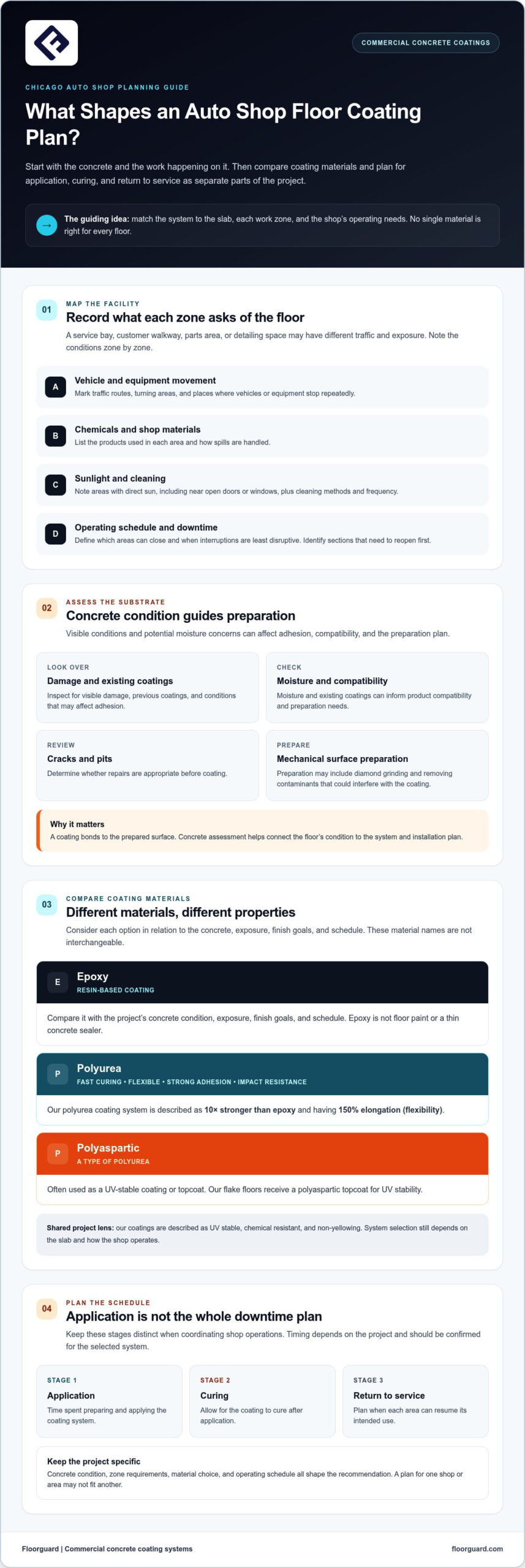
Epoxy is a resin-based coating. It is not floor paint or a thin concrete sealer. Polyurea is a distinct coating material known for fast curing, flexibility, adhesion, and impact resistance. Our polyurea coating system is “10× stronger than epoxy” and has “150 % elongation” (flexibility). Polyaspartic is a type of polyurea, often used as a UV-stable coating or topcoat. Our flake floors receive a polyaspartic topcoat, which makes them UV stable. Each system should be considered in relation to the concrete, exposure, finish goals, and schedule.
Our commercial coating systems include epoxy, polyurea, and polyaspartic options. We match the material and installation plan to the project requirements rather than treating these names as interchangeable or ranking one as universally best. Our coatings are UV stable, chemical resistant, and non-yellowing. The right choice still depends on the slab and how the shop operates.
Why does a concrete assessment matter?
A coating bonds to the prepared surface, so visible condition and potential moisture concerns matter before selecting a system. Our professional preparation process can include:
- Inspecting the slab for visible damage, previous coatings, and conditions that may affect adhesion.
- Checking moisture and existing coatings to inform product compatibility and preparation needs.
- Reviewing cracks and pits to determine whether repairs are appropriate before coating.
- Removing contaminants that could interfere with bonding.
- Mechanically preparing the surface, usually with diamond grinding, to create a suitable profile for the coating system.
These steps aren’t identical for every floor. Moisture findings, crack conditions, and old coatings can call for different decisions, and not every surface can be treated the same way. The recommendation also depends on installation quality, use, exposure, and ongoing maintenance. That’s why we assess the concrete before finalizing a system or schedule. To discuss a project-specific assessment, talk with our team about your auto shop floor.
How to Compare Auto Shop Coating Options Without Guessing
A useful comparison starts with what the floor must handle, not with a material name or a broad strength claim. For an auto shop floor coating Chicago project, compare the shop’s actual slab, traffic, chemical exposure, sunlight, preferred finish, operating schedule, and cleaning routine. The American Concrete Institute offers technical resources on concrete, but the coating recommendation still needs to reflect the specific facility and its floor.
Which criteria matter most in a working auto shop?
Use this framework to organize the project discussion. It identifies what to document and how each factor may affect system selection. It doesn’t rank epoxy, polyurea, or polyaspartic universally, because suitability depends on the project.
| Criterion | What to document | Why it matters |
|---|---|---|
| Substrate | Concrete condition, moisture concerns, existing coatings | Informs preparation and system compatibility |
| Traffic | Vehicle routes, turning, equipment, foot traffic | Clarifies the type and frequency of floor use |
| Chemicals | Products used and areas where spills may occur | Helps identify relevant exposure for system selection |
| UV exposure | Areas receiving direct sunlight | Guides consideration of sun exposure and finish |
| Finish | Desired color, decorative effect, and appearance | Balances visual goals with practical use |
| Timeline | Work areas, operating schedule, acceptable interruption | Helps organize the project around shop operations |
| Maintenance | Cleaning methods and routines | Connects the system and finish to ongoing care |
For our polyurea system, the stated claims are “10× stronger than epoxy” and “150 % elongation” (flexibility). Treat these as specific system features, not as a complete project recommendation or a promise that every floor will perform the same way. Results depend on preparation, product selection, installation quality, use, exposure, and maintenance. Slip resistance depends on using appropriate additives, so don’t assume every finish includes them.
How should a shop evaluate downtime and project scope?
Separate the time spent applying the coating from curing and the point when each work area can return to its intended use. Standard one- to four-car garage installations can be completed in one day. For larger commercial spaces or metallic projects, the timeline depends on the scope and system. Overall, installation takes 1-3 days depending on the system. Walk on by day 3, drive on by day 4, on average. These are distinct stages, so include both installation and cure time when planning downtime.
Floorguard pricing depends on concrete condition, square footage, and chosen system. Our commercial concrete coatings are planned around facility requirements and project scope. To discuss your shop’s floor and operating needs, talk with our team about coating options.
How Floorguard Plans Preparation, Installation, and Return to Service
A dependable coating project starts before the first layer goes down. For an auto shop floor coating Chicago project, we plan around the slab’s condition, areas in scope, selected system, and shop schedule. Preparation, repairs, coating layers, and return-to-service requirements can vary, so we build the work sequence around the facility rather than assume every floor needs the same treatment.
Our process generally follows this order:
- Inspect the concrete. We assess visible surface conditions and the areas included in the project.
- Check moisture and existing coatings. Findings help guide preparation and system selection.
- Review cracks and pits. We determine what repair work is appropriate before coating.
- Prepare the surface mechanically. Diamond grinding is commonly used to prepare concrete for coating.
- Remove dust and contaminants. A clean, properly prepared surface supports coating adhesion.
- Apply the selected coating layers. The plan may include a basecoat, decorative flakes or pigments when selected, and a protective topcoat.
- Allow the system to cure. Keep the floor out of service until it is ready for its intended use.
What happens during professional surface preparation?
We assess the floor, identify preparation needs, and select the work needed to create a suitable coating surface. Grinding and contaminant removal matter because dust, residue, or an unsuitable existing layer can interfere with adhesion. Crack and pit treatment also depends on the actual concrete. Professional preparation and application require the right equipment, materials, and process control. An untrained DIY installation isn’t equivalent to professional preparation and coating application.
The coating sequence follows the project plan, not a fixed recipe. A basecoat supports the system, while flakes or pigments can add a decorative finish when selected. A protective topcoat completes the chosen build. The number and type of layers depend on the system and project requirements. For facility managers seeking broader insight into surface treatment methods, you can explore Concrete Polishing, Epoxy Coatings, and Floor Preparation to see how mechanical prep and specialized finishes are coordinated.
How should the shop plan curing and operations?
Keep application separate from curing and the point when each area can return to its intended use. The room temperature affects the recommended time before normal use: in rooms above 70°F, wait 2 full days; in rooms at or below 70°F, wait 3 full days. On average, walk on by day 3 and drive on by day 4. Plan access around these cure periods, and identify which areas must reopen first so the work sequence reflects the business’s operating needs.
Care matters after installation, too. Avoid using harsh chemicals for cleaning; use only warm water and mild dish soap. If you’re planning a commercial coating project, our commercial concrete coating systems are designed for facility-specific needs. Contact our team to discuss a floor assessment and coating plan for your shop.
A Floorguard Auto Shop Coating Project: Verified Details and Next Steps
A useful case study explains how a facility’s conditions led to a coating plan. It should identify the areas included, what the concrete assessment found, why a system and finish were selected, and how the schedule was set. The framework below shows what to gather when planning an auto shop floor coating Chicago project, without assuming that every shop has the same slab, needs, or schedule.
- Facility and scope: Record the facility type and which work areas are included, rather than assuming the entire building needs coating.
- Documented challenge: Describe the shop’s operational needs, such as chemical exposure, traffic, appearance goals, or limits on downtime.
- Concrete findings: Record observed slab conditions, moisture or existing-coating checks, and any repairs identified during assessment.
- Selection rationale: Connect the chosen system and finish to the assessment and facility requirements. Include preparation steps and coating layers in the project plan.
- Schedule and outcome: Separate installation dates from curing and return-to-service details. Plan the reopening of each area around the system’s cure guidance.
This decision trail is more helpful than a broad claim about coating strength. It shows how concrete condition, use, and operating needs inform the project, without suggesting that the same system or schedule applies to every shop.
What evidence makes the case study useful?
Project photographs can show the floor and finish, but they should accurately represent the job and its scope. Pair images with records of the work areas, preparation, coating system, and timing. Don’t use a photo alone to imply a performance outcome, a specific repair, or a before-and-after result that hasn’t been established.
Floorguard brings “35+ years of experience” and “Over 30 million sq ft installed” to commercial coating projects. We design, manufacture, and install our proprietary coatings, which are made in the USA. Those details provide company context, while the project’s documented conditions and scope show how a specific coating plan was developed.
What is the next step for a Chicago auto shop?
Start with useful project details: how the facility operates, the approximate square footage, known concrete concerns, the areas under consideration, and scheduling needs. These details help our team assess the floor and discuss an appropriate coating plan. Our commercial concrete coating services are planned around the facility and project scope, not a one-size-fits-all approach.
Discuss your Chicago auto shop floor coating project with our team to begin a conversation about an assessment, system recommendation, or project estimate.
Set Your Shop Up for a Clear Coating Plan
Before moving forward, align the people responsible for shop operations around what a successful project needs to accomplish. Decide how the finished floor should support daily work, what appearance fits the space, and which scheduling constraints must shape the plan. That shared direction helps turn an assessment into a practical scope, not just a material choice.
For an auto shop floor coating Chicago project, our manufacturer-installer model connects our proprietary coating systems, made in the USA, with the team applying them. Our limited lifetime warranty covers peeling, delamination, and wear, subject to its terms. Keeping the floor clean at least four times per year with warm water and dish soap is required for warranty coverage.
Bring your facility details and priorities to the conversation. Our team can assess the floor and help identify a coating plan for your project. Pricing depends on concrete condition, square footage, and chosen system. Request an estimate for your Chicago auto shop floor coating project and take the first step toward a plan grounded in your shop’s needs.
Frequently Asked Questions
How should I clean a Floorguard-coated auto shop floor?
Sweep away loose dirt and grit, then mop with warm water and mild dish soap. For a stain, use a soft-bristle brush with the same mild soap solution. Warranty maintenance requires cleaning at least four times per year with warm water and dish soap. Avoid using harsh chemicals for cleaning; use only warm water and mild dish soap.
Are Floorguard floor coatings flammable?
Floorguard floor coatings are not flammable. This doesn’t mean the floor is flame-resistant or fireproof, and it doesn’t replace your shop’s usual fire-safety practices, such as maintaining reliable sprinkler systems through commercial fire protection contractors like Firemex Solutions Inc.. Keep the coating’s intended use in mind and follow the product and facility guidance relevant to your work area.
Can Floorguard install a floor coating in cold weather?
Yes. We have successfully installed coatings in cold weather. For an auto shop floor coating Chicago project, the selected system and project conditions still matter, especially when coordinating application with curing and the shop’s operating schedule. Share the facility’s expected conditions and downtime limits with our team so we can plan around the floor’s use and return-to-service needs.
What does Floorguard’s limited lifetime warranty cover?
Our limited lifetime warranty covers peeling, delamination, and wear, subject to its terms and conditions. Warranty maintenance requires cleaning the floor at least four times per year with warm water and dish soap. Follow the care requirements and review the warranty terms for the conditions that apply to your installation. Coverage is limited to the stated terms, not every type of damage or floor issue.
How long can a properly maintained Floorguard coating last?
A properly maintained Floorguard coating can last a lifetime, but that isn’t a guaranteed service life for every auto shop floor. Concrete condition, preparation, system selection, installation quality, traffic, exposure, and maintenance all affect performance over time. A coating’s possible lifespan is distinct from warranty coverage, which remains subject to its terms and conditions.
Do Floorguard flake floors stay stable in sunlight?
Yes. Our flake floors receive a polyaspartic topcoat, which makes them UV stable. This matters in areas that get direct sun, such as floor sections near windows or open doors. Tell our team which parts of the shop receive sunlight when discussing the project, since exposure is one factor in choosing and planning a coating system. Maintain the floor with warm water and mild dish soap, and avoid harsh chemicals.


